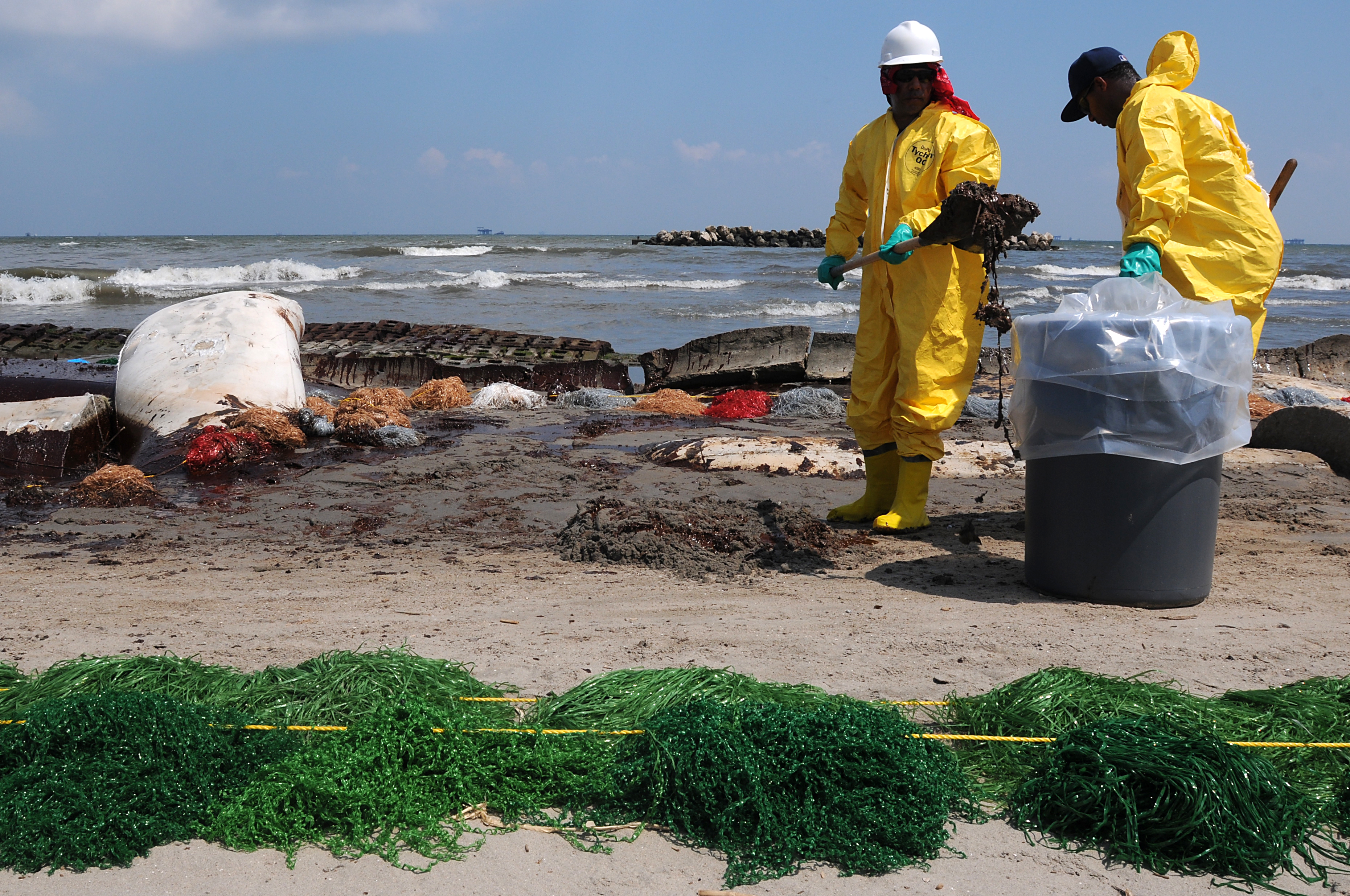
Where were you April 20, 2010? If you are like most Americans, you flipped the dial (we watched TV then) and saw a fire in the Gulf of Mexico. It may not have seemed like much at the time. Like all tragedies, it's often impossible to fully stomach the weight of such incidents until much later. And the BP oil spill was no different.
It took until July 15 that year to seal the Macondo well, the oil gushing to the tune of millions of gallons following the fire on the Deepwater Horizon rig owned by
Transocean. In the months that followed, thousands of brown pelicans, Kemp's ridley sea turtles, herons, and fish perished. Even
dolphins' offspring died, many of them washing up as premies on the beaches of
Louisiana's coasts.
Today, Collin O’Mara, president and CEO, National Wildlife Federation; along with Ryan Sikes, Gulf of Mexico staff scientist for NWF; and David Muth, NWF's Gulf program director, weighed in on funding priorities for the Gulf. Remarkably, it's only this month they said that funds have actually started flowing from the massive BP payout to affected Gulf interests.
On its website, the NWF states, "On April 4, 2016, the Department of Justice and the five Gulf states finalized a global settlement with BP for $20.8 billion dollars, to be paid out over the next 15 years."
Importantly, though, NWF calculates that about $16 billion will be going to ecological restoration. The 2012 Restore Act dictates that funds from the
Clean Water Act go to Gulf states.
Further, each Gulf state - affected in varying degrees by the catastrophe - will receive a portion of
BP dollars each year through 2031. Specifically, $4.4
billion will go to the Gulf region via the RESTORE Act to be used for ecosystem and economic restoration and recovery. Another $8.8 billion is available under the Oil Pollution Act’s Natural Resource Damage Assessment (NRDA) process to restore areas where wildlife were damaged by the spill and where recreational areas were affected.
The breakdown is as follows:
- Texas will get $37 million annually
- Louisiana will receive $372 million annually
- Mississippi will get $50 million annually
- Alabama will receive $51 million annually
- Florida will get $74 million annually
NWF has created a handy,
interactive map that delineates where dollars are going. Divided by states, one can key in whatever criteria interests them - i.e. click on Louisiana, then punch the Port Fourchon emblem - and information about how funds are being used pops up.
This reporter asked whether scientific studies of Corexit had been showing evidence of damage, and if lessons had been learned from the Gulf spill that would prohibit its use going forward.
Sikes took the questions, starting with the first part. He said a lot of research has been and is being done, for example with the
Gulf of Mexico Research Initiative (or GOMRI). "They're in their seventh year of research looking at impacts of Corexit," he said. "We know it amplifies toxicity," he said in part. As for whether they'd learned their lessons, he said he wasn't at liberty to say.
NWF said that while so far, only a quarter of the $16 billion has been "committed to projects across the Gulf," the process is, apparently complicated and includes funds from criminal fines resulting from a $2.54 billion 2013 Justice Department settlement.
While the accounting of the spill is fairly complex and difficult for many to understand, seeing real results happen will be both welcome and obvious as they occur. For example, land loss in Louisiana is occurring at a frightening clip, and losing precious wetlands means losing habitat and nutrients — So if projects such as Timbalier Islands Barrier Island Restoration are successful, they will restore dune and beach habitat as well as reduce storm surge impacts, among other plusses. Likewise, the Isles Derniers Barrier Island Restoration project will restore those islands, offering beach, dune, and back barrier marsh habitat to protect them from storm surge impacts.
With the impact of climate change, glaciers are melting and seas are rising: New Orleans along with Miami and New York are extremely vulnerable to sea rise. The BP funds to help coastal restoration can help alleviate a plague that still challenges a recovering gulf, including oil still on the sea floor.
To see scientific studies detailing the effects of the dispersant Corexit on the Gulf of Mexico following the spill, click here.
For more information on how funds have been allocated in the Gulf, click here.
PHOTO: Wikimedia Commons Images. "Health, safety and environment (HSE) workers contracted by BP clean up oil on a beach in Port Fourchon, La., May 23, 2010. Hundreds of contracted HSE workers are cleaning up oil from the Deepwater Horizon oil spill, which began washing up onto area beaches a month after the drilling unit exploded." Source:; Author: PO3 Patrick Kelley.