
Showing posts with label Deepwater Horizon Oil Spill. Show all posts
Showing posts with label Deepwater Horizon Oil Spill. Show all posts
Friday, April 20, 2018
Eight years ago, the 87-day BP Gulf oil spill had just begun

Sunday, July 16, 2017
Time to comment on priorities for restoring the Gulf, says RESTORE Council
The BP oil spill that began on April 20, 2010 and lasted 87 days, gushed 200 million gallons of crude oil into the Gulf of Mexico off the coast of Louisiana. Further tarnishing the ecosystem occurred following generous air drops of the dispersant Corexit around the area of Barataria Bay and in other affected regions, called "zones". Birds, turtles, dolphins, and people were sickened by the horrific spill and the dispersant effects. Coral in the Gulf is still suffering, an additional pummeling besides the blight of climate change.
Now it's time for people in the Gulf, those most affected by this disaster, to voice their pain and share their experiences.
The Gulf Coast Ecosystem Restoration Council has announced the availability of the Draft 2017 Funded Priorities List: Comprehensive Commitment and Planning Support in accordance with the Resources and Ecosystems Sustainability, Tourist Opportunities, and Revived Economies of the Gulf States Act (RESTORE Act).
"In the draft CPS FPL, the Council proposes to provide its members with funding to enhance collaboration, coordination, public engagement and use of best available science needed to make efficient use of Gulf restoration funds resulting from the Deepwater Horizon oil spill. These awards will support the Council’s commitment to a coordinated approach to ecosystem restoration, as called for in the Comprehensive Plan Update 2016: Restoring the Gulf Coast’s Ecosystem and Economy. The draft CPS FPL is now available for public and Tribal review and comment at www.restorethegulf.gov," they wrote in a press release issued July 13.
 To ensure consideration, the Council must receive written comments on the 2017 Draft Funded Priorities List: Comprehensive Commitment and Planning Support by 11:59pm MT August 14, 2017.
Further, the second of two informational webinars will be conducted July 25 (the first was on July 13). You may register for the webinar in advance. Once registered, a link to access the webinar will be sent to the email address you provide:
July 25, 2017 at 2:00 pm Central Time [Webinar Registration Link]: https://register.gotowebinar.com/register/6303399390784342017
Please Note: all questions and comments typed will be considered as a public comment and will be part of the public record. This includes your name, e-mail, and any other information you provide.
Attendees will not have the ability to ask questions orally. When answering these questions, Council staff will not identify the participant asking the question(s). Council staff will provide written responses to all questions as part of the response to public comments.
HOW TO COMMENT: You may submit public comments via the following methods:
Electronic Website Submission: www.restorethegulf.gov
Email: frcomments@restorethegulf.gov
Mail/Commercial Delivery to:
Gulf Coast Ecosystem Restoration Council
Attention: Draft FPL Comments
Hale Boggs Federal Building
500 Poydras Street, Suite 1117
New Orleans, LA 70130
FOR ADDITIONAL INFORMATION: Please send questions by email to RestoreCouncil@restorethegulf.gov, or contact Keala J. Hughes at (504) 717-7235.
To ensure consideration, the Council must receive written comments on the 2017 Draft Funded Priorities List: Comprehensive Commitment and Planning Support by 11:59pm MT August 14, 2017.
Further, the second of two informational webinars will be conducted July 25 (the first was on July 13). You may register for the webinar in advance. Once registered, a link to access the webinar will be sent to the email address you provide:
July 25, 2017 at 2:00 pm Central Time [Webinar Registration Link]: https://register.gotowebinar.com/register/6303399390784342017
Please Note: all questions and comments typed will be considered as a public comment and will be part of the public record. This includes your name, e-mail, and any other information you provide.
Attendees will not have the ability to ask questions orally. When answering these questions, Council staff will not identify the participant asking the question(s). Council staff will provide written responses to all questions as part of the response to public comments.
HOW TO COMMENT: You may submit public comments via the following methods:
Electronic Website Submission: www.restorethegulf.gov
Email: frcomments@restorethegulf.gov
Mail/Commercial Delivery to:
Gulf Coast Ecosystem Restoration Council
Attention: Draft FPL Comments
Hale Boggs Federal Building
500 Poydras Street, Suite 1117
New Orleans, LA 70130
FOR ADDITIONAL INFORMATION: Please send questions by email to RestoreCouncil@restorethegulf.gov, or contact Keala J. Hughes at (504) 717-7235.

Photo: Courtesy of Wikimedia Commons Images - Washing an oiled gannet, a victim of the BP oil spill, May 1, 2010
Sunday, April 16, 2017
Repost from 2015: BP oil spill 5 years later: a young family struggles with oil, Corexit effects
The following article was published April 19, 2015 on Examiner.com. It's since been very lightly edited.
For one young family living in Long Beach, Miss., the Macondo well blowout and BP oil spill that began April 20, 2010 is more than a footnote in our nation's tragic environmental history.
For Christina Tillman and husband Derek, now raising three boys just a few miles from where they lived in coastal Pass Christian, Mississippi, everyday life means continual trips to the doctor and worries about their children's and their own long-term health.
While no one in the family worked on the Vessels of Opportunity, like many residents there, the toxic effects following the Macondo well blowout were horrific.
At the time, the couple's only son, Gaven, was 2. Prior to the BP oil spill, his mom says he was a very healthy little boy. But afterwards, she says, "We went to the beach every now and then, [and later] chemicals found in his body showed a lot of the symptoms and signs [of the toxicity of the spill.]"
Indeed. She shared the boy's bloodwork results with this reporter, which show that on Dec. 15, 2010, ethylbenzene in the amount of 0.1" to 0.3" ppb was detected, placing him in the 95th percentile for volatile solvents.
It cost the couple about $450 for this test, one of a flurry of bills they'd incur over the years as they struggled to handle not only the physical but the financial and emotional tolls of post-spill life.
Christina says they left Pass Christian because it was evident that it was toxic to live there. Not only did she and her family - including mother-in-law Shirley Tillman, who's spoken out frequently to the press and shared pictures of dead turtles she found on the beach - feel this, but so did visitors, who'd ask "what that smell was."
"We could smell it – it was the day after the explosion; they hadn’t even reported anything about it on our local news station," she says, echoing a comment from Daisy Seal, who underwent 13 miscarriages and whose child has experienced kidney failure.
“I remember going outside and smelling something that smelled like burning oil. I had commented about it – and for about 30 seconds that night they mentioned something about this thing exploding," she says.
And the dangers didn't just issue from the petroleum products, but from the copious amounts of Corexit being air dropped along the Gulf.
Tillman is a medical professional who has worked in the operating room as a surgical technologist, meaning she hands instruments to the surgeon. Now she is an instructor at Mississippi Gulf Coast Community College.
She says that after the spill, that autumn, they were seeing a marked number of patients in for respiratory distress. Then they saw an uptick in the number of surgical cancellations in the pediatrics unit where she worked in Mississippi.
"On our particular surgery days, when it all first came about, the children and elderly started to get sick, and we would probably see anywhere from 300 to 500 pediatric patients a day in Gulfport. This was late 2010, early 2011," she says.
She says she saw a "drastic drop" in the number of surgeries that could be performed due to cancellations. Where they would do about nine to ten surgeries on a surgical day, that number was cut basically in half. Sometimes on a half-day workday there weren't any surgeries, which was highly unusual.
“The drastic drop lasted a good six months. It started kind of decreasing gradually from I would say probably May, slowly started to decrease and there was a huge drop and it remained for a good halfway to the end of 2011," she says.
"But I will tell you we never made it all the way back up the chain when I left in December 2011 because I just remember when I first started working there it was fast paced ... we had a full case load and were trying to get 'em in and out."
Meanwhile, the Tillmans were dealing with their own health problems - Gaven's issues and then the health battles of the children who were to come: Maddox, now 3, and little Declan, 3 months. Big brother Gaven is now 6, going on 7.
Following is the edited version of the list of symptoms her family sent to this reporter:
Derek (husband/father):
"His symptoms started severely around November (2010) and lasted about three to four months. These symptoms were a lot like what you would experience with severe allergies, a cold, or flu," she says.
• Severe nasal congestion and sinus inflammation (rhinitis and sinusitis)
• Severe cough and chest congestion
• Sore throat and extreme redness
• Tonsilitis, bronchitis, and laryngitis
• Red, watery, burning eyes and irritation
• Nausea and vomiting
• Dizziness
• Severe body aches
• Sores and lesions in the mouth and throat
• Severe headaches
"None of his sympoms ever lead to infections, so he never really had a fever. Maybe once, when his symptoms were at their most extreme in November. Once they went away a few months later; he was better than the rest of us. Derek has asthma, his asthmatic symptoms were very severe during this period," says Christina.
Christina (wife/mother):
"Severe symptoms started around October to November and lasted for almost a year off and on," she says. "I was sick for a good six months ongoing, after that it would go away and return. A lot of the symptoms [were] the same as Derek's, but lasted longer."
• Severe nasal congestion and sinus inflammation (rhinitis and sinusitis)
• Severe cough and chest congestion
• Sore throat and extreme redness
• Tonsilitis, bronchitis, and laryngitis
• Red, watery, burning eyes and irritation; "blood vessels would burst in my eyes and it would hurt"
• Nausea and vomiting
• Dizziness
• Severe body aches
• Sores and lesions in the mouth and throat
• Rashes that hurt and "looked like the map of the US all over the body"
• Fever
• Severe headaches and migraines
"The sinus congestion was unlike anything I had or have ever experienced. Your head would feel like it was literally going to explode from the pressure built up inside it. Your eyes would even feel like they were about to pop out of your head. It was horrible," she shares.
Gaven (eldest boy):
"This poor baby got the worst of everything. I'm going to list what I can remember of all his problems here, but I'm also going to attach what I had written up about his experience in case I miss anything [which was a very long list of symptoms.]," she says. "There was so much in his case. I was looking at his medical records and his symptoms started mildly in July, became more moderate in September, and were severe starting in September. His symptoms were ongoing for a year and a half, and lasted just over two years all together..."
• Severe nasal congestion and sinus inflammation (rhinitis and sinusitis)
• Severe cough and chest congestion
• Sore throat and extreme redness
• Tonsilitis, bronchitis, and laryngitis
• Red, watery, burning eyes and irritation; blood vessels would burst in his eyes and it would hurt
• Nausea and vomiting
• Dizziness
• Severe body aches
• Sores and lesions in the mouth and throat
• Several different types of rashes all over the body; sometimes splotchy, sometimes patchy, etc. His would even turn into these little lesions as well. One time they even thought he might have the measles because the rash he had seemed like the one associated with it.
• Fever (sometimes as high as 104 and 104.5)
• Severe headaches
• Ear infections
• Leukocytosis
• Sleep apnea
Maddox (middle boy):
"Around May of 2013 he started to experience some very mild symptoms associated with allergies. The problem was, and what brought major concern with Dr. Cupp [the family pediatrician], was the fact that they were a little more ongoing than she liked and she noticed that all of his lymph nodes were very inflamed. They did some blood tests and his white blood cell count was extremely high. She was concerned that he might have cancer, leukemia particularly," Christina says.
After further testing it was discovered that he did not and she was never able to pinpoint what was the cause of any of it, says Christina. In September of 2014, the same thing happened and he "had a mass that formed on his leg that was removed by surgery. They thought it was an infection, like staph, but it wasn't. That's when they became concerned with cancer once more and he was tested for leukemia again and also lymphoma. He has been doing fine since November of 2014 and she will test him again later this year just in case," Christina says.
Declan (the baby): "A few days after Declan was born, he started having trouble feeding and breathing," Christina says. "Of course this was very concerning for us, so I approached his pediatrician with some videos of what was happening. In turn, his pediatrician became concerned as well. She sent him to a specialist at Ochsner's who had to do an endoscopy on him (while I had to hold him in my lap). That day, at two weeks of age, Declan was diagnosed with a few different disorders: one is called laryngotracheomalacia, which affects his feeding and his breathing." She says his epiglottis did not form correctly; "instead of being like the hard cartilage it should be, it's very soft and flappy." It also doesn't fully cover as it should, which can cause him to aspirate because when feeds he can take the fluid into his lungs..." Eldest son had VOC in blood Although Christina and her husband, a former minor league ball player who works as a plumber, also experienced problems, like most parents the focus was on the kids. In 2010, that child was Gaven, and with his severe symptoms and with the advice of toxicologist Rikki Ott, the boy was taken in for a blood test. Derek's mom, Shirley Tillman, has been an activist following the spill, sharing pictures of dead, washed-up turtles that ended up published in international media. Ott has been fighting the use of dispersants such as Corexit, and is an Exxon Valdez spill survivor. Sadly, the results of Gaven's blood test showed the presence of ethylbenzene when samples were taken Dec. 15, 2010. Ethylbenzene, according to the Agency for Toxic Substances & Disease Registry, has developmental effects - meaning it can affect organs that are developing, as well as the nervous system. It is a "colorless, flammable liquid that smells like gasoline. It is found in natural products such as coal tar and petroleum and is also found in manufactured products such as inks, insecticides, and paints..." Going forward: it's not 'all better' Christina and Derek have obviously been blessed with the births of not just one or two, but three boys. Their ability to maneuver the battery of medical tests and procedures, driving their boys to doctors far and near, some of whom thought Christina was crazy for drawing a link to the spill, is nothing short of remarkable. Christina has thought all along that Corexit is dangerous, but mentioning this to some people resulted in them looking at her "like I'd seen a UFO." Asked to comment on Corexit's effects in particular, the EPA did not get back to this reporter by press time. The million-dollar-question, of course, is why was the Gulf of Mexico a huge litmus test for a toxic chemical banned in the very country in which BP operates? Asked to comment on Corexit's effects on the Gulf, a BP spokesman shared the following written statement from the company: "BP’s use of dispersants during the Deepwater Horizon response was coordinated with, and approved by, US federal agencies, including the US Environmental Protection Agency (EPA) and the US Coast Guard. Throughout the response, BP worked closely with US Occupational Safety and Health Administration (OSHA), the US National Institute for Occupational Safety and Health (NIOSH) and other US government agencies to take extraordinary measures to safeguard the health and safety of responders. Workers were provided safety training and appropriate personal protective equipment (PPE), and were monitored by federal agencies and BP to measure potential exposure levels and help ensure compliance with established safety procedures. Workers applying dispersants received training on work procedures and PPE usage designed to minimize exposures, and were provided respirators and other PPE. Due to the extensive controls in place, there was little potential for worker or public exposure to dispersants. More than 30,000 air monitoring samples were collected by the Coast Guard, OSHA, NIOSH, and BP as part of a comprehensive air monitoring program to evaluate the potential for human exposure to dispersant and oil compounds. The results showed that response worker and public exposures to dispersants were well below levels that could pose a health or safety concern. Extensive monitoring conducted by federal agencies and BP show that response workers and the public were not exposed to dispersant compounds at levels that would pose a health risk. Please see." For families such as the Tillmans, who are still struggling with not only health effects but medical bills and a horrific emotional toll, the dispersants did not make it "all better." They have a medical claim filed and are hoping to receive some measure of justice; yet meanwhile, who will pay for even four more sets of blood tests that should be done for the rest of her family? Everyday challenges for families in the Gulf include finding the time to take kids for tests of health effects these families just are not prepared to deal with. Other families might not even have health insurance, or both parents work. Who's going to take the kids in? A parent could lose his income if he spent 24/7 dealing with such matters. While the oil spill was awful, the Corexit, made it worse. It made these children's health symptoms much, much worse. This is the truth, and while the truth is slow to come out sometimes, it is starting to emerge. Just look up "Corexit: rashes" and see what comes up on a Google search. And why is it that the EPA is now seeking public comment to make amendments to how it uses dispersants following oil spills? Readers, you have til Apr. 22 to comment. In a Twitter chat moderated by the Ocean Conservancy on Friday, numerous tweeters pointed out how toxic the dispersants were and are. When this reporter tweeted, "#OurGulf @OurOcean Dr @SylviaEarle spoke out clearly against use of #Dispersants after 2010 spill started. What's yer position on #Corexit?," none other than Dr. Samantha Joye, the noted Univ. of Ga. biogeochemist, responded: Mandy Joye @SeepExplorer Apr 17 @WriterWeegs @OurOcean @SylviaEarle #OurGulf - no evidence that dispersants made things better other than keeping oil off shore." Numerous scientific papers have been written about the use of dispersants since the spill, and Joye said in a following tweet that we can expect a paper from her team too. In response to someone commenting on her tweet, that the news about Corexit still seemed "opaque," Joye wrote: "... papers coming out soon. Some questions answered ... Many more raised." Indeed, many more questions have been raised about the most horrific oil spill in US history, one that killed 11 good men on the rig April 20, 2010, and has since killed thosuands of dolphins, turtles, fish, brown pelicans, herons and much more. “I got to where I quit running on the beach," Christina Tillman says of those days following the BP oil spill and dispersant airdrops. "In three months I saw two dead dolphins. I said that’s it – I am sick of seeing all the dead animals. I exercise, I run, and I used to go [walking on the beach]," she says, choking back tears. "I remember seeing tons and tons of dead fish – in Pass Christian and in Long Beach – it was everywhere. Usually you will see a dead fish, but this was lots, dozens. It was hundreds of fish. But it was when I started to see the bigger mammals, like dolphins [that I just 'lost it']," she says. "One day I thought it was a big piece of trash and it was a dolphin, and you have to call the marine people to come," she says. Photos: Used with permission from Christina Tillman. Top: Maddox in the hospital, Bottom: Gaven then 6, Maddox then 3, Declan then 3 months. The boys are now 8, 5, and 2. Top photo by Heather Rafferty, Ella J. Reese Photography An earlier version of this story referred to Dr. Sylvia Earle, not Dr. Samantha Joye, as the noted UGA biogeochemist. It has been corrected.


Monday, April 3, 2017
Restore Council approves BP spill Louisiana State expenditure plan for $811.9M
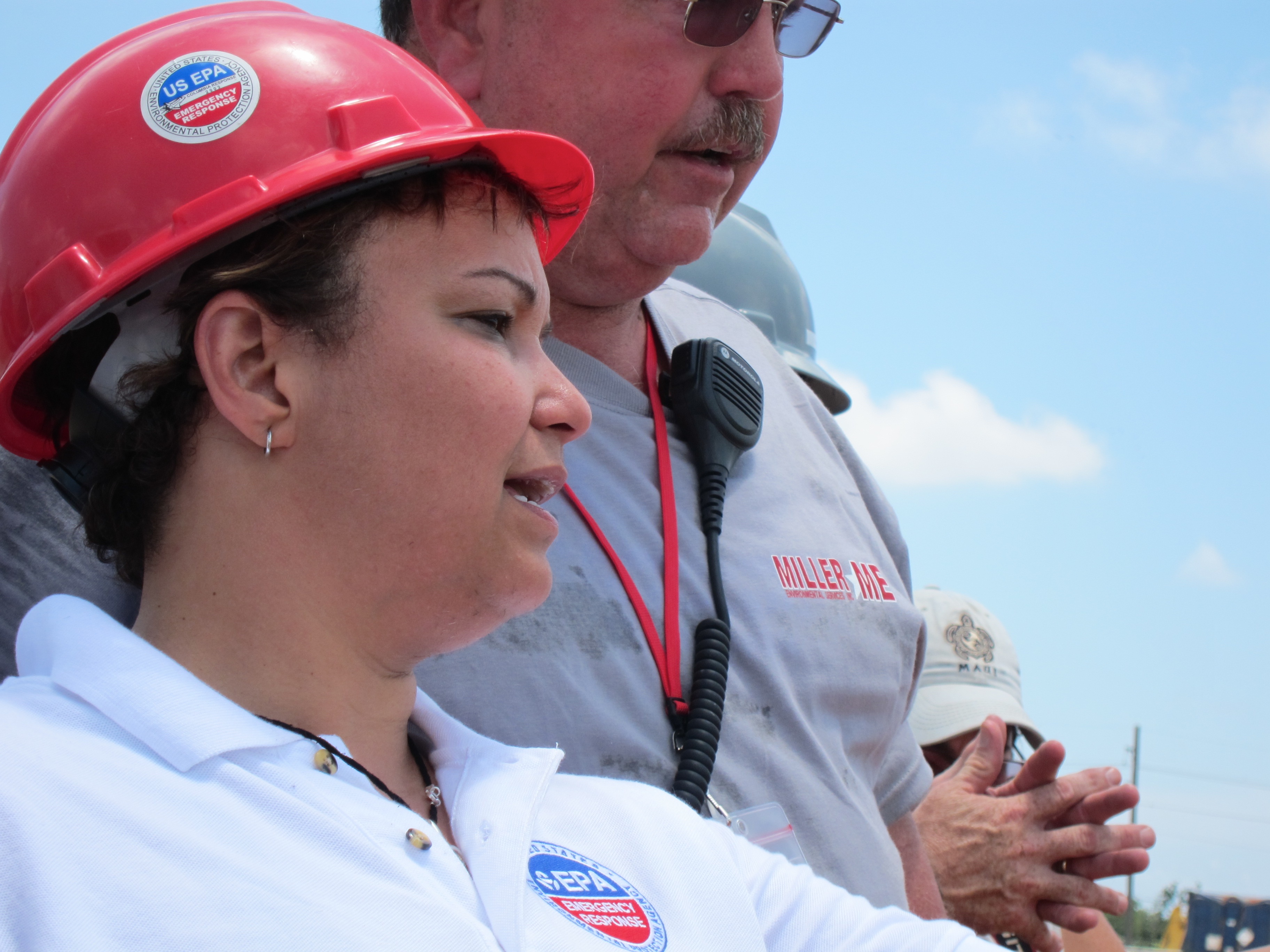
The Gulf Coast Ecosystem Restoration Council Chair, U.S. Department of Agriculture, has approved the Louisiana State Expenditure Plan. The Council chair has found the Louisiana SEP is complete and meets all requirements contained in the RESTORE Act, the Department of the Treasury’s implementing regulations, and the Council’s SEP Guidelines, according to a press release issued today. The USDA provided Louisiana with a letter of approval, reiterating the Council’s commitment to ensuring an efficient and effective process for funding the activities in Louisiana. More information regarding the projects funded with the BP oil spill award dollars was covered in today's press release, which states in part: "Louisiana’s Coastal Protection and Restoration Authority (CPRA) announces that the Gulf Coast Ecosystem Restoration Council (RESTORE Council) and the U.S. Department of Treasury (Treasury) have both accepted the CPRA’s First Amended Multiyear Implementation and State Expenditure Plan (RESTORE Plan) under the Resources and Ecosystems Sustainability, Tourist Opportunities and Revived Economies of the Gulf Coast States Act of 2012 (RESTORE Act). This plan describes how the state intends to spend its total allocation of $811.9 million over 15 years from both the Spill Impact Component and the Direct Component of the Gulf Coast Restoration Trust Fund (RESTORE Trust Fund). With the plan officially accepted by both agencies, CPRA can now apply for grants to begin implementing the important projects and programs described in the plan." In September 2015, Louisiana was the first state to have a plan for spending then-available Direct Component funds from the Transocean Deepwater settlement, $39 million. The Bayou State is now the first to have a plan accepted by both Treasury and the RESTORE Council for the expenditure of all of its Direct Component and Spill Impact Component funds from the Transocean, Anadarko Petroleum Corporation and BP Exploration & Production Inc. settlements over 15 years. The activities include: - the Calcasieu Salinity Control Measures project ($260.4 million) under the Direct Component - The Houma Navigation Canal Lock Complex ($366 million), Adaptive Management ($60.9 million), the CPRA-Parish Matching Opportunities Program (up to $100 million), and contingency funds (approximately $24.6 million) under the Spill Impact Component. According to the press release, the Calcasieu Salinity Control Measures project is southwest Louisiana's largest ecosystem restoration project. "Additionally, the Adaptive Management program will allow us to identify sustainable implementation solutions in a dynamic ecosystem while the Parish Matching program will enable us to partner with coastal parishes to advance comprehensive integrated coastal protection projects of particular local concern”, said Michael Ellis, Executive Director of the CPRA. The RESTORE Act allocates 80 percent of all Clean Water Act penalties paid by those responsible for the 2010 BP oil spill to the RESTORE Trust Fund for the restoration and protection of the Gulf Coast region. The Act contains five funding components, one of which directs 35 percent of funds deposited into the trust fund to each of the five Gulf Coast states in equal shares for ecological and economic restoration (the “Direct Component”), and one of which directs 30 percent of the funds deposited in the trust fund to each of the five Gulf Coast states to address the ecological and economic impacts from the oil spill based on a formula established by the Council. For more information, please visit: The Coastal Protection and Restoration Authority, "The State of Louisiana's First Amended RESTORE Plan". Photo: courtesy of Wikimedia Commons Images, then EPA Administrator Lisa Jackson surveying the oil in the Gulf of Mexico at Grand Isle, La., June 11, 2010, EPA photo.

Wednesday, March 8, 2017
(Repost from 2010) Delay in calling spill of 'national significance', other fumbles (part one of oil spill comm report)
The following article originally ran on Examiner.com, Oct. 7, 2010
In its report issued yesterday (Oct. 6, 2010), the Oil Spill Commission cites numerous problems on the part of the US government when handling the crisis that evolved from the April 20 blowout of the Macondo well, including unnecessary delays, inter-agency mismanagement and possible incorrect use of containment methods.
For purposes of brevity, herewith are highlights from the first half of the report, with part two to follow tomorrow:
* The response was supervised at a national level by a National Incident Commander. On April 29, 2010, the Coast Guard designated the disaster a "Spill of National Significance," and brought in retired Admiral Thad Allen of the US Coast Guard.
* "Though some of the command structure was put in place very quickly, in other respects the mobilization of resources to combat the spill seemed to lag. For about nine days, Deepwater Horizon response efforts continued with the Federal On-Scene Coordinator at the top of the command structure. National Leaders such as Dep. Secretary of the Interior David Hayes were innvolved, but the response was still largely regional in nature--the President had not been to the region, Cabinet secretaries had not yet become involved, and the responders were from the local area," it says in the report.
* Conversations regarding a spill of "national significance" actually first occurred, though, in the first week of the spill -- even though Allen was not brought in for 10 days.
* Dispersant use in the Gulf was questioned by the media, and about that time EPA administrator Lisa Jackson took over the role of overseeing dispersant use, with the federal on-scene coordinator (Paul Zukunft) and Regional Response Teams losing control of this responsibility. The Regional Response Teams are composed of regional representatives from state and local government. The US Coast Guard leads the Regional Response Teams during responses to oil spills in the coastal waters.
Tomorrow, part two--including BP's role and an analysis of booms and berms. ***
PHOTOS: TOP: From Wikimedia Commons Images, A C-130 Hercules from the Air Force Reserve Command's 910th Airlift Wing at Youngstown-Warren Air Reserve Station, Ohio, drops an oil-dispersing chemical into the Gulf of Mexico May 5, 2010, as part of the Deepwater Horizon Response effort. The 910th AW specializes in aerial spray and is the Department of Defense's only large-area, fixed-wing aerial spray unit. Source: US Air Force public affairs story direct link; Author: Technical Sergeant Adrian Cadiz; BOTTOM: former EPA Administrator Lisa Jackson, by Laurie Wiegler, New Orleans, April, 2011.
***
PHOTOS: TOP: From Wikimedia Commons Images, A C-130 Hercules from the Air Force Reserve Command's 910th Airlift Wing at Youngstown-Warren Air Reserve Station, Ohio, drops an oil-dispersing chemical into the Gulf of Mexico May 5, 2010, as part of the Deepwater Horizon Response effort. The 910th AW specializes in aerial spray and is the Department of Defense's only large-area, fixed-wing aerial spray unit. Source: US Air Force public affairs story direct link; Author: Technical Sergeant Adrian Cadiz; BOTTOM: former EPA Administrator Lisa Jackson, by Laurie Wiegler, New Orleans, April, 2011.


Tuesday, February 28, 2017
Despite 2010 tragedy, BP advances deepwater drilling in the Gulf
It's never in the news anymore. It was the biggest oil spill in U.S. history, but these days it's rarely even a footnote on the TV news or online.
Anderson Cooper recently remarked on Late Night with Seth Meyers that "it's not like the Obama administration was the most welcoming to the media" and that  President Obama hadn't agreed to an interview with him after the BP oil spill. Cooper had been down in the Gulf, as he had following Katrina. His reporting has historically been conscientious and thorough, yet even Cooper is beholden to whatever constraints CNN producers place on him.
This reporter/blogger spoke at a symposium at the University of Georgia in early 2011, and one of the attendees asked whether the event would be of interest down the road. A fellow journalist remarked that that was a good question.
But whether you, the reader, care or not; whether this issue is as flashy and newsworthy as it once was or not; the fact remains that BP is not only very much still in business, but at work in the Gulf.
Here is the activity around Louisiana waters:
President Obama hadn't agreed to an interview with him after the BP oil spill. Cooper had been down in the Gulf, as he had following Katrina. His reporting has historically been conscientious and thorough, yet even Cooper is beholden to whatever constraints CNN producers place on him.
This reporter/blogger spoke at a symposium at the University of Georgia in early 2011, and one of the attendees asked whether the event would be of interest down the road. A fellow journalist remarked that that was a good question.
But whether you, the reader, care or not; whether this issue is as flashy and newsworthy as it once was or not; the fact remains that BP is not only very much still in business, but at work in the Gulf.
Here is the activity around Louisiana waters:
>Photo: "A ship floats amongst a sea of spilled oil in the Gulf of Mexico after the BP Deepwater Horizon oilspill disaster." Wikimedia Commons Images.
June 16, 2010; Flickr: Deepwater Horizon Oil Spill - Gulf of Mexico; Author: kris krüg

1) Thunder Horse South Expansion: Started Dec. 2016. The company says on its website that, "The Thunder Horse platform is located around 150 miles southeast of New Orleans in over 6,000 feet of water. The South Expansion Project comprises a new subsea drill centre located two miles from the Thunder Horse platform. Three new wells and an existing fourth well are expected to tie-into the new drill centre. Topsides scope is minimal as a result of maximising use of existing subsea infrastructure." The deepwater oil project partner is ExxonMobil at 25 percent, with BP owning 75 percent of the interest. It is currently under construction.
2) Thunder Horse Water Injection: "The Thunder Horse platform is located around 150 miles southeast of New Orleans in over 6,000 feet of water. The water injection project is expected to develop an additional 65 million barrels of oil equivalent (gross). The project scope comprises refurbishment and replacement of existing topsides and subsea equipment, procurement and installation of new equipment and the drilling and completion of two water injection wells. Water will be injected from the two new wells into the reservoir to increase pressure and enhance production." The project is jointly run by Exxon, also at 25 percent. It was begun in May of last year.
3) Finally, Mad Dog Phase II "includes a new semi-submersible floating production platform with the capacity to produce up to 140,000 gross barrels of crude oil per day from 14 production wells. The new platform will be moored approximately six miles southwest of the existing Mad Dog platform, which is located in 4,500 feet of water about 190 miles south of New Orleans." It's jointly owned by BP at 60.5 percent along with BHP Billiton (23.9 percent) and Chevron (15.6 percent.)The April 20, 2010 Deepwater Horizon explosion resulted in an 87-day oil "spill" after killing 12 rig workers off the coast of Louisiana. Following that, the last presidential administration authorized the copious use of toxic dispersants, a.k.a. Corexit, to "cover up" the mess. An environmental worker familiar with the situation said it was the best solution at the time because it kept oil from spilling further up into the marsh and wetlands. All told, about 200 million gallons of oil erupted into the waters off Louisiana, sickening and killing marine life and wildlife across the five Gulf states. Further, thousands of residents in the most affected areas such as Pass Christian, Mississippi; Orange Beach, Alabama; and Grand Isle, Louisiana reported sores, breathing difficulties, kidney problems, and weight loss.
Thursday, February 23, 2017
'Patti Pelican and The Gulf Oil Spill' a hopeful, kid-friendly look at tragedy
The following article was originally published by Laurie Wiegler on Examiner.com, June 22, 2016. It has been lightly edited.
When Lynda Wurster Deniger saw the horrific sight April 20, 2010 coming from the TV set, she was devastated. "I would just sit there and bawl," she says of that day and the days that followed, the 87 days it took to cap the Macondo well off the southern coast of Louisiana. But as a writer and former newspaper reporter, she wanted to turn her anguish into something that could help people. Her popular children's book, Salty Seas & His Heroic Friends, would prove the ideal launching-off point for the book she would write, buttressed again by the beautiful illustrations from Paulette Ferguson. The children's book with the character of Captain Charley and friends Patti Pelican, Dottie Dolphin and Sammy Seagull introduced shrimping at sea, but it would be the second book, inspired by tragedy, that would be the writer's real challenge. And it was one she and her illustrator pulled off beautifully. "I had Captain Charlie and Salty actually being involved in the boom and trying to help with the cleanup," Deniger says. She began traveling around to Louisiana schools and sharing the story with school kids - not just reading to them, but "entertaining," she says. The sixtysomething light sees it as her mission to make sure the kids of today don't forget or in the case of the really young ones, miss learning about the Deepwater Horizon disaster. "I don't mention BP in the book," she says, but acknowledges that the blown-up well on the cover is a pretty loud clue. She brings it up because someone said it'd be nice if BP could've helped in some way. Buying the books for the kids? Deniger sells them at the schools very inexpensively, and they come with a recording of her reading the book. Asked if it was tough to put a positive spin on a tragic tale, she is not defensive. She explains that she went out to a rescue center to see how the brown pelicans were being washed. The oil-soaked birds' images that flooded the television airwaves for weeks were something else altogether up close. "I called a man at the rescue center in Venice (La.) and asked if he'd be open to my coming down there," she says. "He said sure. I toured the facility, and took pictures, many of which would be used to make the illustrations (by Ferguson)." The writer says she's not touring as much now, that interest is waning. People forget and move on, even as another oil spill, approximately 88,000 gallons from Shell Oil out on Timbalier Island, makes news. That gusher was snuffed quickly, hardly made national news, and certainly didn't inspire a book. But the fact is: the state's national bird, the beloved brown pelican, is endangered. Thousands and thousands perished, and before they did so, suffered with oil-coated bodies. What Deniger is doing could be described as heroic, but she's not one to boast. No, her mission is to make the kids understand. "I take a bottle of water and dirty oil I got from my mechanic, and mix it together to show the kids," she says. I ask, 'What do you think is gonna happen? And they go 'Wow!', because oil and water don't mix." To buy the book, please visit Amazon or check with your local booksellers. Cover art: Used with permission. Illustrator: Paulette Ferguson



Friday, February 10, 2017
Six years after BP oil spill, dolphins, fish and corals inspire restoration

 The following article ran on Examiner.com on the sixth anniversary of the BP oil spill, April 20, 2016
Six years ago today, April 20th, TV viewers nationwide turned on the news to see a horrific site: footage of a fire on a rig in the Gulf off the Louisiana coast. The BP oil "spill" had begun, and at the time, no one would have imagined it would take 87 days to cap the Macondo well.
Twelve workers on the Deepwater Horizon rig died that day. For their families, today is a sacred and painful reminder that the errors made leading up to the spill are deeply personal. There were also several serious injuries, and countless illnesses tied to the catastrophe.
Beyond the human tragedy, which included individuals still suffering health effects from working on a Vessels of Opportunity boat that would prove cruelly and ironically named, respiratory illnesses, kidney problems, weight loss, and mysterious rashes would fill their family photo albums.
The tragedy of that day doesn't just include the oil. The dispersant, so called Corexit from the UK - again, ironically since BP stands for British Petroleum - was airdropped by the truckload on Barataria Bay and throughout the gulf.
I spoke to Ocean Conservancy's Bethany Kraft, Director of their Gulf Restoration Program, who said this week that while scientific studies have been and are being done on dispersant effects, largely, at this stage, it's tough to parse what damage was done by them versus the oil.
"I think the jury is still out on that," Kraft said. "In the early days (of the spill), some decisions were made - it was a trade-off, because had all that oil reached the coast, it would have been an environmental and public relations disaster on multiple fronts. It would have been a PR disaster for the government and for BP."
Her concerns right now are numerous. Early restoration projects have begun, even as the bulk of the BP billions won't roll out until next year. Projects currently underway include a seagrass restoration project in Florida; a loggerhead, green, and Kemp's Ridley turtle project in Texas that seeks to offset bycatch by way of trawling with gear improvements and increased monitoring; and a Florida-based fishing gear conversion project that will help bluefin tuna fishermen.
Her overarching concern is addressing this question: "How do we put together the suites of programs in an order and in places where they will reap the most benefits?" She said, too, that it is critically important that as ecosystem restoration goes into overdrive that the science leads, not politics or personalities.
From dead corals to dead turtles, dolphins who give birth to premies who wash up dead on Gulf shores, to deep concerns about the health of the ecosystem and human residents, the legacy of all that oil and Corexit will last for decades, maybe centuries.
And the fix can't be myopic. For example, when addressing a watershed issue, look too at oyster issues and fisheries, helping the oyster harvest and shoreline protection, said Kraft.
Ironically again, had the spill not occurred, the coastal erosion issues are among many preexisting problems funded by the BP dollars approved by Judge Carl Barbier in the New Orleans federal courthouse.
Even so, the funds are "a drop in the bucket in terms of what our needs are," Kraft said.
Are there any positives in the Gulf six years following the disaster? She said yes.
"I think we learned this ecosystem is resilient, even though any rubber band eventually loses its elasticity and breaks," she said. "It is reassuring in some ways, and one thing the spill did do was catalyze cooperation across the region like we haven't seen before."
However, she said with a dark laugh, "it's a really dumb business model to get hooked on."
The following article ran on Examiner.com on the sixth anniversary of the BP oil spill, April 20, 2016
Six years ago today, April 20th, TV viewers nationwide turned on the news to see a horrific site: footage of a fire on a rig in the Gulf off the Louisiana coast. The BP oil "spill" had begun, and at the time, no one would have imagined it would take 87 days to cap the Macondo well.
Twelve workers on the Deepwater Horizon rig died that day. For their families, today is a sacred and painful reminder that the errors made leading up to the spill are deeply personal. There were also several serious injuries, and countless illnesses tied to the catastrophe.
Beyond the human tragedy, which included individuals still suffering health effects from working on a Vessels of Opportunity boat that would prove cruelly and ironically named, respiratory illnesses, kidney problems, weight loss, and mysterious rashes would fill their family photo albums.
The tragedy of that day doesn't just include the oil. The dispersant, so called Corexit from the UK - again, ironically since BP stands for British Petroleum - was airdropped by the truckload on Barataria Bay and throughout the gulf.
I spoke to Ocean Conservancy's Bethany Kraft, Director of their Gulf Restoration Program, who said this week that while scientific studies have been and are being done on dispersant effects, largely, at this stage, it's tough to parse what damage was done by them versus the oil.
"I think the jury is still out on that," Kraft said. "In the early days (of the spill), some decisions were made - it was a trade-off, because had all that oil reached the coast, it would have been an environmental and public relations disaster on multiple fronts. It would have been a PR disaster for the government and for BP."
Her concerns right now are numerous. Early restoration projects have begun, even as the bulk of the BP billions won't roll out until next year. Projects currently underway include a seagrass restoration project in Florida; a loggerhead, green, and Kemp's Ridley turtle project in Texas that seeks to offset bycatch by way of trawling with gear improvements and increased monitoring; and a Florida-based fishing gear conversion project that will help bluefin tuna fishermen.
Her overarching concern is addressing this question: "How do we put together the suites of programs in an order and in places where they will reap the most benefits?" She said, too, that it is critically important that as ecosystem restoration goes into overdrive that the science leads, not politics or personalities.
From dead corals to dead turtles, dolphins who give birth to premies who wash up dead on Gulf shores, to deep concerns about the health of the ecosystem and human residents, the legacy of all that oil and Corexit will last for decades, maybe centuries.
And the fix can't be myopic. For example, when addressing a watershed issue, look too at oyster issues and fisheries, helping the oyster harvest and shoreline protection, said Kraft.
Ironically again, had the spill not occurred, the coastal erosion issues are among many preexisting problems funded by the BP dollars approved by Judge Carl Barbier in the New Orleans federal courthouse.
Even so, the funds are "a drop in the bucket in terms of what our needs are," Kraft said.
Are there any positives in the Gulf six years following the disaster? She said yes.
"I think we learned this ecosystem is resilient, even though any rubber band eventually loses its elasticity and breaks," she said. "It is reassuring in some ways, and one thing the spill did do was catalyze cooperation across the region like we haven't seen before."
However, she said with a dark laugh, "it's a really dumb business model to get hooked on."
PHOTOS: Top, the author on a boat in Barataria Bay, early April, 2013; Bottom, via Wikimedia Commons Images, Department of the Interior - June 30, 2010. Birds Prepared for Release at Fort Jackson Wildlife Rehabilitation Center, CC BY-SA 2.0, https://commons.wikimedia.org/w/index.php?curid=45431346
Friday, December 16, 2016
Gulf Coast Ecosystem Restoration Council approves plan to restore Gulf
The Gulf Coast Ecosystem Restoration (RESTORE) Council approved its updated Comprehensive Plan to restore Gulf Coast ecosystems "and their natural resource dependent economies" it was announced today in a press release.
Kara Lankford, Interim Director of Ocean Conservancy’s Gulf Restoration Program, said in a statement:
"Ocean Conservancy is pleased to see the Gulf Ecosystem Restoration Council renew their commitment in this updated plan to using the best available science when selecting projects to restore the Gulf. This road map for comprehensive restoration of the Gulf ecosystem is a critical foundation piece to ensure a science-based, holistic approach."
The Council, in its report, says that "Gulf restoration funding is distributed among a number of entities and programs, each with its own set of guidelines and decision processes." As anyone trying to untangle red tape knows, what matters is who gets paid and when.
The Clean Water Act penalties resulting from the spring 2010 BP/Deepwater Horizon oil disaster are allocated as follows:
- 35% allocated for ecosystem restoration, economic development, and tourism promotion, distributed to all five affected Gulf states (Florida, Alabama, Mississippi, Louisiana, and Texas);
- 30% for what are called "Council-administered restoration activities";
30% to the states based on impact (i.e. Louisiana was hit the hardest as it was closest to the April 20, 2010 spill);
-2.5% for research administered by the National Oceanic Atmospheric Administration (NOAA);
and 2.5% administered by the U.S. Treasury for Gulf research programs.
Read about the Comprehensive Plan here .
Photo: Wikimedia Commons images; by Petty Officer 2nd Class Justin Stumberg, from www.defense.gov/photoessays/photoessayss.aspx?id=1667
.
Photo: Wikimedia Commons images; by Petty Officer 2nd Class Justin Stumberg, from www.defense.gov/photoessays/photoessayss.aspx?id=1667
Friday, December 9, 2016
Gulf Coast Ecosystem Restoration Council releases 2016 plan update
NEW ORLEANS, LA – The Gulf Coast Ecosystem Restoration Council has released an update to its 2013 Comprehensive Plan, the council shared in an emailed statement yesterday, Dec. 8.
The update provides additional "strategic guidance" for the council to follow as they make decisions on restoration funding projects in the Gulf of Mexico.
The group will meet to vote on the Comprehensive Plan Update and hear from restoration partners including representatives from the Deepwater Horizon Natural Resource Damage Assessment Trustees and the National Fish and Wildlife Foundation Gulf Environmental Benefit Fund.
The meeting will be next Friday, December 16, at the Hyatt Regency Hotel, Celestin Ballroom Section E (3rd Floor), 601 Loyola Avenue in NOLA from 9:00 a.m. - 11:00 a.m. The public is invited to attend.
For additional information, and to register for this meeting please click here. Onsite registration will be available on the day of the meeting from 8:00 a.m. – 9:00 a.m. This meeting is also available via live webinar and may be posted on www.RestoreTheGulf.gov. You can register for the webinar here (link is external).
The Comprehensive Plan Update is intended to improve council decisions by reinforcing the council’s goals and objectives, setting forth an initial 10-year funding strategy, and establishing the council’s vision for Gulf restoration, among other goals.
The Council has updated its Initial Comprehensive Plan to include recent developments in Gulf restoration such as the resolution of civil claims against BP for the Deepwater Horizon oil spill.
With the recent announcement that President-Elect Trump's proposed EPA Administrator will be Oklahoma Attorney General Scott Pruitt, citizens of the Gulf have reason for concern: a ramp up, not winding down, of deepwater drilling means more risk for spills such as occurred in April, 2010.
 PHOTO: Oil from the Deepwater Horizon oil spill approaches the coast of Mobile, Ala., May 6, 2010. Image via Wiki Commons.

Monday, October 24, 2016
Pregnant bottlenose dolphins give birth to premies, high mortality post BP spill

Tuesday, August 23, 2016
Gulf environmental groups respond positively to update of restoration plan
Today, the Gulf Coast Ecosystem Restoration Council published an update of its Comprehensive Plan, worth billions, to restore the gulf post-BP oil spill. It augments the original comprehensive plan approved two years earlier.
One of the highlights of the report was that the Council is affirming its commitment to incorporate the best available science, which they note "will evolve over time" and with "changing conditions." One example of a science-based funding priority is developing "science tools to support freshwater inflow restoration" and prioritizing future conservation. Further, the Council is committed to studying the Lower Mississippi River to "support more holistic river management."
The plan's reaffirmation of the Council's commitment to science-based and other funding priorities is consistent with Congressional decree : projects that are "projected to make the greatest contribution to restoring and protecting the natural resources, ecosystems, fisheries, marine and wildlife habitats, beaches, and coastal wetlands of the Gulf region;" large-scale projects to restore and protect natural resources, ecosystems, fisheries, marine and wildlife habitats, beaches and coastal wetlands; projects contained in existing Gulf Coast State comprehensive plans for restoration and protection of the aforementioned; and projects that restore long-term resiliency of the region's ecosystem, fisheries, and the like.
Collin O’Mara, president and CEO of the National Wildlife Federation, said of the update: “For wildlife in the Gulf of Mexico, the Deepwater Horizon disaster is not over. More than six years after the well was capped, dolphins are still dying, corals are still damaged, and sea turtles are still struggling to nest. The comprehensive plan as updated would help ensure billions of dollars are spent well on restoring the Gulf. We’re pleased with many elements of the draft—particularly the emphasis on coordination at all levels and the support for efforts at a scale that will deliver cumulative benefits to the Gulf of Mexico.
And Kara Lankford, interim director for Ocean Conservancy’s Gulf Restoration Program, said in a written statement: "
“The Gulf Coast Ecosystem Restoration Council is headed in the right direction, and we think this updated plan represents progress. This plan update wasn’t due until 2018, so the Council is ahead of schedule. The Council has a huge task ahead to help restore the environment of the Gulf region. Commendably, they have committed to restoring the Gulf ecosystem by working in a more holistic fashion, rather than state by state, or agency by agency. Dolphins and many other Gulf wildlife swim across state lines, and that is why it is necessary for Council members to work together to restore the Gulf ecosystem as a whole. Likewise, we’re pleased to see the Council include a renewed commitment to updating and improving how science will be utilized in its project selection processes.”
The Council will also hold a number of public and Tribal meetings across the Gulf to hear from the public and Tribes regarding this update. The locations, dates, and times for the public meetings can be found at RestoretheGulf.gov.
Caption: By U.S. Fish and Wildlife Service Southeast Region - Oil arrives on Bon Secour (La.) Uploaded by AlbertHerring, CC BY 2.0, https://commons.wikimedia.org/w/index.php?curid=29827305
: projects that are "projected to make the greatest contribution to restoring and protecting the natural resources, ecosystems, fisheries, marine and wildlife habitats, beaches, and coastal wetlands of the Gulf region;" large-scale projects to restore and protect natural resources, ecosystems, fisheries, marine and wildlife habitats, beaches and coastal wetlands; projects contained in existing Gulf Coast State comprehensive plans for restoration and protection of the aforementioned; and projects that restore long-term resiliency of the region's ecosystem, fisheries, and the like.
Collin O’Mara, president and CEO of the National Wildlife Federation, said of the update: “For wildlife in the Gulf of Mexico, the Deepwater Horizon disaster is not over. More than six years after the well was capped, dolphins are still dying, corals are still damaged, and sea turtles are still struggling to nest. The comprehensive plan as updated would help ensure billions of dollars are spent well on restoring the Gulf. We’re pleased with many elements of the draft—particularly the emphasis on coordination at all levels and the support for efforts at a scale that will deliver cumulative benefits to the Gulf of Mexico.
And Kara Lankford, interim director for Ocean Conservancy’s Gulf Restoration Program, said in a written statement: "
“The Gulf Coast Ecosystem Restoration Council is headed in the right direction, and we think this updated plan represents progress. This plan update wasn’t due until 2018, so the Council is ahead of schedule. The Council has a huge task ahead to help restore the environment of the Gulf region. Commendably, they have committed to restoring the Gulf ecosystem by working in a more holistic fashion, rather than state by state, or agency by agency. Dolphins and many other Gulf wildlife swim across state lines, and that is why it is necessary for Council members to work together to restore the Gulf ecosystem as a whole. Likewise, we’re pleased to see the Council include a renewed commitment to updating and improving how science will be utilized in its project selection processes.”
The Council will also hold a number of public and Tribal meetings across the Gulf to hear from the public and Tribes regarding this update. The locations, dates, and times for the public meetings can be found at RestoretheGulf.gov.
Caption: By U.S. Fish and Wildlife Service Southeast Region - Oil arrives on Bon Secour (La.) Uploaded by AlbertHerring, CC BY 2.0, https://commons.wikimedia.org/w/index.php?curid=29827305

Saturday, July 11, 2015
Five years writing about the Gulf of Mexico oil spill, and far more remains to be said.
When the Apr. 20, 2010 BP oil spill made the news that evening, this reporter didn't think too much of it. I remember looking away, figuring it was a small fire that would probably end within hours. But that was not to be.
It soon became apparent that the deaths of 11 good men who worked on the rig would besmirch BP's name in a way no bad PR ever could. And as if that wasn't bad enough, the oil bled for 87 days despite numerous attempts by Admiral Thad Allen and team to cap the Macondo well. When it was finally shut down July 15, 2010, the spin was that all was well: many of us knew otherwise. Thousands of birds, marine life, marsh areas and humans were impacted in a way no other U.S. environmental disaster's ever pummelled us.
On July 10 of that year, I began reporting for Examiner (some call it "blogging") because I wanted to keep covering this story as it happened. As a freelance writer, which I've enjoyed pretty much full-time since 2008, and part-time off and on since college, I nevertheless spend many hours/days/even months waiting for editors to reply to pitches. I knew that after a couple of unsuccessful queries, this story just didn't have time to percolate in the Manhattan offices of busy editors who were looking for angles and news "hooks."
By January of 2011, I interviewed Dr. Samantha ("Mandy") Joye, a Univ. of Ga. biogeochemist who made national news for telling it like it was out in the Gulf. She'd been deep diving there long before anyone though of BP other than when they got gas. I felt fortunate to get this noted scientist to talk to me, even if it meant an e-mail conversation. Soon after receiving her answers back, I was in for a surprise: her staff asked if I'd join Justin Gillis of The New York Times, Richard Harris of NPR, and a CNN producer down in Georgia in a couple of weeks to speak about how we could better communicate after disasters such as these, as part of a symposium called "Building Bridges in Crisis."
Of course I would, and looking back, it was a definite highlight of my career. Even then, when giving my speech about the dead dolphins, the turtles washing up on shore, the sick people working on the Vessels of Opportunity, I knew that we could easily meet back in a year or two or even 10. I knew the Gulf of Mexico was a mess and this story was far from over. Sadly, I was right.
Further, Corexit dispersants doused by the gallon-full and airdropped along the Gulf reached an estimated 1.84 million gallons. These dispersants aren't even used in the very country in which they're manufactured, England; and since the spill, California's successfully passed legislation to block such reactions to spills. (Good timing considering the recent Santa Barbara spill.) In 2012 I would write a story for AARP on Dr. Sylvia Earle, the National Geographic Explorer-in-Residence who keynoted at the UGA conference. Dr. Earle talked to me at length about the dangers of Corexit, how she spoke before Congress on this, and how "out of sight does not mean out of mind."
She knew only too well, as would noted toxicologist Riki Ott, how Corexit sickened the dolphins, turtles and precious other sea creatures and birds in the Gulf, how it made everyone and everything worse. Its only "benefit" was that it kept a lot of the oil from travelling further into the marshes, while along the way choking the life out of fish and birds feeding innocently at Barataria Bay on their morning dispersant-soaked worms.
Here are five of what I consider my most impactful posts concerning the wildlife and marine life affected by the BP oil disaster. These stories stand apart from the equally horrific blight that has affected the thousands of Gulf residents, especially those who lived or worked in Zone A (the most affected areas), following the spill.
1. Dr. Joye explains why we owe it to the ecosystem to learn from the oil spill: Dr. Joye was one of the first scientists to speak the truth about what was going on on the sea floor. In further months she'd draw a link between the spill and methane pollution down deep into the water column. In our Jan. 6 e-mail interview, she told me: "NOAA claims that 75 percent of the oil from the blowout is 'gone.' I would argue that a lot of that oil has 'landed on' the bottom…it’s not 'gone' and it’s still having an impact, a very negative one!, on the system. Why is this important? Because we need to know how much oil is down there, where it is and what impacts it’s having. This is critical because understanding/documenting the impacts and the system’s recovery from those impacts is essential for truly understanding the repercussions of this blowout."
2. Hundreds of oil-impacted turtles and dozens of dolphins have perished: When I published this story July 29, just a few months after the spill, we were just beginning to grasp the huge disaster this was and how it affected the beautiful sea creatures who grace the Gulf. I reported that, "Seven hundred seventy-seven dead or injured turtles have been documented to date," according to Oceana. Elizabeth Griffin Wilson, marine wildlife scientist and fisheries campaign manager, told me: “No one really knows how many [turtles have died]. That’s one of the big challenges with sea turtles. Once they’re out there in the water they’re really hard to find.” Of the 777 reported by “Unified Command” – which provides Oceana with a daily estimate of wildlife affected by the spill – 283 of those were collected alive and 494 were dead.
3. Ulcerated blue crabs found in Gulf, at Mississippi Sound: When I published this story, we were just beginning to grasp the huge impact the spill had on the shellfish and other marine creatures in the Gulf. Here it was, over two years after the spill, and Lorrie Williams was taking photos of ulcerated crabs along the beach at Gulf Springs, Miss. Ironically, the photographer was and remains suffering as much as the crab in the photo: she's endured pancreatitis, lung polyps, extreme weight loss and other health effects as a result of her and her husband's work out on the waters.
4. Animals keep dying, so where are the official wildlife reports?: It's now been well documented that we'll never know the exact or even near exact numbers of brown pelicans, herons, and other birds that died as a result of the disaster. At the time I published this, it would have boggled everyone's minds to know that Audubon, a couple years later, would cite that over a million birds had died as a result of the Deepwater Horizon/BP oil disaster.
5. BP oil spill 5 years later: NWF cites record numbers of dead turtles, dolphins: The National Wildlife Federation (NWF) reported in "Five Years and Counting: Gulf Wildlife in the Aftermath of the Deepwater Horizon Disaster," 20 different species have been gravely impacted by the spill. (Note, these are just the ones in the report.). Namely, dolphins on the Louisiana coast were found dead at four times historic rates in 2014, and there is increasing evidence that these ongoing deaths are connected to the Apr. 20, 2010 BP oil spill; 2010 and 2011 had the lowest numbers of young red snapper seen in the eastern Gulf fishery since 1994; coral colonies in five separate locations in the Gulf—three in the deep sea and two in shallower waters—are showing signs of oil and or some mixture of oil-and-Corexit damage; and prior to the spill, the number of endangered Kemp’s ridley sea turtle nests found annually was accelerating, but since 2010 the nests found annually have declined.
BP recently settled in principle with the U.S. Dept. of Justice for $18.7 billion for breaching the Clean Water Act and Oil Pollution Act; this is irrespective of the multi-billion-dollar criminal fines it incurred and anything resulting from claimants' medical and other damages.
 April 20, 2010
Source: (Via Wikimedia Commons Images) U.S. Coast Guard - 100421-G-XXXXL- Deepwater Horizon fire
Author Unknown
April 20, 2010
Source: (Via Wikimedia Commons Images) U.S. Coast Guard - 100421-G-XXXXL- Deepwater Horizon fire
Author Unknown

Thursday, September 26, 2013
BP heads back to court Monday: Wants to downplay amount of oil that spewed into Gulf
This morning, the National Wildlife Federation e-mailed a press release, which I received. They remind that on Monday, BP heads back to court "to try and convince U.S. District Judge Carl Barbier that the company’s Deepwater Horizon well spewed just 2.45
million barrels of crude oil into the Gulf of Mexico—significantly less than the 4.1 million barrels the government’s team of scientists has estimated."
The NWF, rightly, points out that BP "has a long history of downplaying the size of the spill—the company pled guilty to lying to Congress on this very topic."
Any decrease in the official estimate of the volume of the spill would greatly benefit BP’s bottom line, NWF says. "Under the Clean Water Act, BP will have to pay anywhere from $1,100 to $4,300 per barrel spilled, depending on the degree of negligence found.
Reducing the estimated size of the spill will also hurt the outlook for the Gulf of Mexico. Thanks to the RESTORE Act, 80 percent of the Clean Water Act fines will be sent back to the region affected by the disaster."

Here are some of the areas that NWF urgently wants addressed:
Monday issues in the second phase of the trial, which will determine the company’s civil liabilities for violating the Clean Water Act, the Oil Pollution Act and other federal environmental laws.
The Clean Water Act civil fines are meant to be punitive, while the Oil Pollution Act requires that BP pay to repair the damage to the Gulf.
For more information, please click here.
Bold marks/hyperlinks are largely those of the writer's.
Note: an earlier version of this blog incorrectly listed the NWF as the National Fish & Wildlife Federation.
Caption for photo: An egret in the Gulf of Mexico was oiled because of the BP spill. Credits: U.S.Fish & Wildlife Service
The NWF, rightly, points out that BP "has a long history of downplaying the size of the spill—the company pled guilty to lying to Congress on this very topic."
Any decrease in the official estimate of the volume of the spill would greatly benefit BP’s bottom line, NWF says. "Under the Clean Water Act, BP will have to pay anywhere from $1,100 to $4,300 per barrel spilled, depending on the degree of negligence found.
Reducing the estimated size of the spill will also hurt the outlook for the Gulf of Mexico. Thanks to the RESTORE Act, 80 percent of the Clean Water Act fines will be sent back to the region affected by the disaster."

Here are some of the areas that NWF urgently wants addressed:
- Deep sea impacts: Just yesterday, the National Oceanic and Atmospheric Administration (NOAA) released a study indicating that it may take decades for the deep sea ecosystem to recover.
- Dolphin deaths: NOAA’s investigation into the unprecedented dolphin and whale mortalities in the Gulf of Mexico—particularly bottlenose dolphins—continues.
- Oiled shorelines: In June, a 40,000-pound tar mat was found off a Louisiana barrier island and 200 miles of the Louisiana coast remain oiled. Tar balls from the disaster regularly foul the beaches and coastlines of Florida, Alabama and Mississippi.
- Blue crabs: Crabbers from Florida to Louisiana are complaining about low crab catches this year and scientists are investigating the oil disaster as a potential cause.
Monday issues in the second phase of the trial, which will determine the company’s civil liabilities for violating the Clean Water Act, the Oil Pollution Act and other federal environmental laws.
The Clean Water Act civil fines are meant to be punitive, while the Oil Pollution Act requires that BP pay to repair the damage to the Gulf.
For more information, please click here.
Bold marks/hyperlinks are largely those of the writer's.
Note: an earlier version of this blog incorrectly listed the NWF as the National Fish & Wildlife Federation.
Caption for photo: An egret in the Gulf of Mexico was oiled because of the BP spill. Credits: U.S.Fish & Wildlife Service
Thursday, May 23, 2013
Gulf Coast Ecosystem Restoration Council releases draft of restoration plan
 | |
| Photo: Laurie Wiegler, 2013. David Muth of the National Wildlife Federation, Bay Jimmy, La. |
At just after 3 pm CT today, the Gulf Coast Ecosystem Restoration Council sent out a press release stating that they'd "marked significant progress today with the public release of the Draft Initial Comprehensive Plan: Restoring the Gulf Coast’s Ecosystem and Economy (PDF 621kb) and accompanying Draft Environmental Assessment (PDF 1.1 MB) for formal public comment".
The draft provides a framework, they said, to "implement a coordinated region-wide restoration effort in a way that restores, protects, and revitalizes the Gulf Coast region following the Deepwater Horizon oil spill"
The plan:
- establishes overarching restoration goals for the Gulf Coast region;
- provides details about how the Council will solicit, evaluate, and fund projects and programs for ecosystem restoration in the Gulf Coast region;
- outlines the process for the development, review, and approval of State Expenditure Plans;
- and highlights the Council’s next steps.
The Council is hosting a series of public engagement sessions in each of the five impacted Gulf states next month. The 30-day formal public comment period for the Draft Plan and associated documents began today, May 23, and ends June 24.
Public meetings to discuss the Draft Plan are scheduled for the following dates and locations:
- June 3, 2013: Pensacola, Fla.
- June 5, 2013: Spanish Fort, Ala.
- June 10, 2013: Galveston, Tex.
- June 11, 2013: Biloxi, Miss.
- June 12, 2013: Belle Chasse, La.
- June 17, 2013: St. Petersburg, Fla.
Comments can be submitted here: http://parkplanning.nps.gov/
Background
The Council was established by the Resources and Ecosystem Sustainability, Tourism, Opportunities Revived Economies of the Gulf Coast States Act of 2012 (RESTORE Act), to help restore the ecosystem and economy of the Gulf by developing and overseeing implementation of a comprehensive plan and action.
To read more stories about the Deepwater Horizon oil disaster and its aftermath, please click here.
Subscribe to:
Posts (Atom)