
Tuesday, April 21, 2020
BP oil spill 10 years later: Kemp's ridleys even more endangered

Monday, April 20, 2020
BP oil spill 10th anniversary: still unanswered questions concerning Corexit, human and wildlife toll


To contribute to Bella's health fund, please visit this page.
Thursday, April 26, 2018
National Wildlife Federation, Tulane Issue Recommendations for a More Resilient New Orleans
 NEW ORLEANS -- Today the National Wildlife Federation (NWF) and the Tulane University ByWater Institute released recommendations on how the City of New Orleans can "actively build coastal resiliency across the metro region."
It's no secret that New Orleans has lost an area the size of Rhode Island, over 2,000 square miles in 80 years, due to coastal erosion. With climate change threatening to amp up extreme weather events, there's never been a more critical time to rally forces and buttress the Big Easy. To the extent that that's possible, of course.
The recommendations announced today derive from a planning session held earlier this year when 40 representatives of business and industry, state and local governments, academia, non-profit organizations and community-based groups met to discuss how NOLA can assist in making coastal Louisiana more physically, economically and socially resilient, according to an NWF release.
The report's executive summary states that, "According to the State of Louisiana’s Coastal Master Plan, a future without action could mean a loss of roughly 2,250 square miles of land over the next 50 years."
The recommendations center around: coordinating with regional partners across city departments, communicating the rationale for immediate and sustained action and promoting equitable solutions that enable New Orleans and the region to thrive.
“The reality is that, while many residents may not think of New Orleans this way, our Crescent City is a coastal city,” said David Muth , director of NWF’s Gulf Restoration Program. “Healthy coastal wetlands all around New Orleans provide a critical buffer from storm surge and protection for our communities. Without them, our citizens are at increased risk from the impacts of extreme storms and sea level rise.”
NEW ORLEANS -- Today the National Wildlife Federation (NWF) and the Tulane University ByWater Institute released recommendations on how the City of New Orleans can "actively build coastal resiliency across the metro region."
It's no secret that New Orleans has lost an area the size of Rhode Island, over 2,000 square miles in 80 years, due to coastal erosion. With climate change threatening to amp up extreme weather events, there's never been a more critical time to rally forces and buttress the Big Easy. To the extent that that's possible, of course.
The recommendations announced today derive from a planning session held earlier this year when 40 representatives of business and industry, state and local governments, academia, non-profit organizations and community-based groups met to discuss how NOLA can assist in making coastal Louisiana more physically, economically and socially resilient, according to an NWF release.
The report's executive summary states that, "According to the State of Louisiana’s Coastal Master Plan, a future without action could mean a loss of roughly 2,250 square miles of land over the next 50 years."
The recommendations center around: coordinating with regional partners across city departments, communicating the rationale for immediate and sustained action and promoting equitable solutions that enable New Orleans and the region to thrive.
“The reality is that, while many residents may not think of New Orleans this way, our Crescent City is a coastal city,” said David Muth , director of NWF’s Gulf Restoration Program. “Healthy coastal wetlands all around New Orleans provide a critical buffer from storm surge and protection for our communities. Without them, our citizens are at increased risk from the impacts of extreme storms and sea level rise.”

Photos by Laurie Wiegler: New Orleans' Napoleon House restaurant and bar and flying out of the Big Easy after the BP oil spill, Aug. 2010.
Friday, April 20, 2018
Eight years ago, the 87-day BP Gulf oil spill had just begun

Saturday, September 23, 2017
EPA Approves Emergency Fuel Waiver for Florida

Photo: Wikimedia Commons Images
Thursday, August 31, 2017
EPA and Tex. Commission on Environmental Quality Release Statement on Harvey Floodwater Hazards
The U.S. Environmental Protection Agency and The Texas Commission on Environmental Quality released the following statement today, in regards to the water quality of flood-impacted areas from Hurricane Harvey:
“EPA and TCEQ are aware that releases of wastewater from sanitary sewers occur during major flood events. The agencies actively work to monitor those facilities that have reported spills, as well as conducting outreach and providing technical guidance to all other wastewater facilities in flood-impacted areas.
“Floodwaters may contain many hazards, including bacteria and other disease agents. Precautions should be taken by anyone involved in cleanup activities or any others who may be exposed to flood waters. These precautions include heeding all warnings from local and state authorities regarding boil water notices, swimming advisories, or other safety advisories. In addition to the drowning hazards of wading, swimming, or driving in swift floodwaters, these waters can carry large objects that are not always readily visible that can cause injuries to those in the water. Other potential hazards include downed power lines and possible injuries inflicted by animals displaced by the floodwaters.
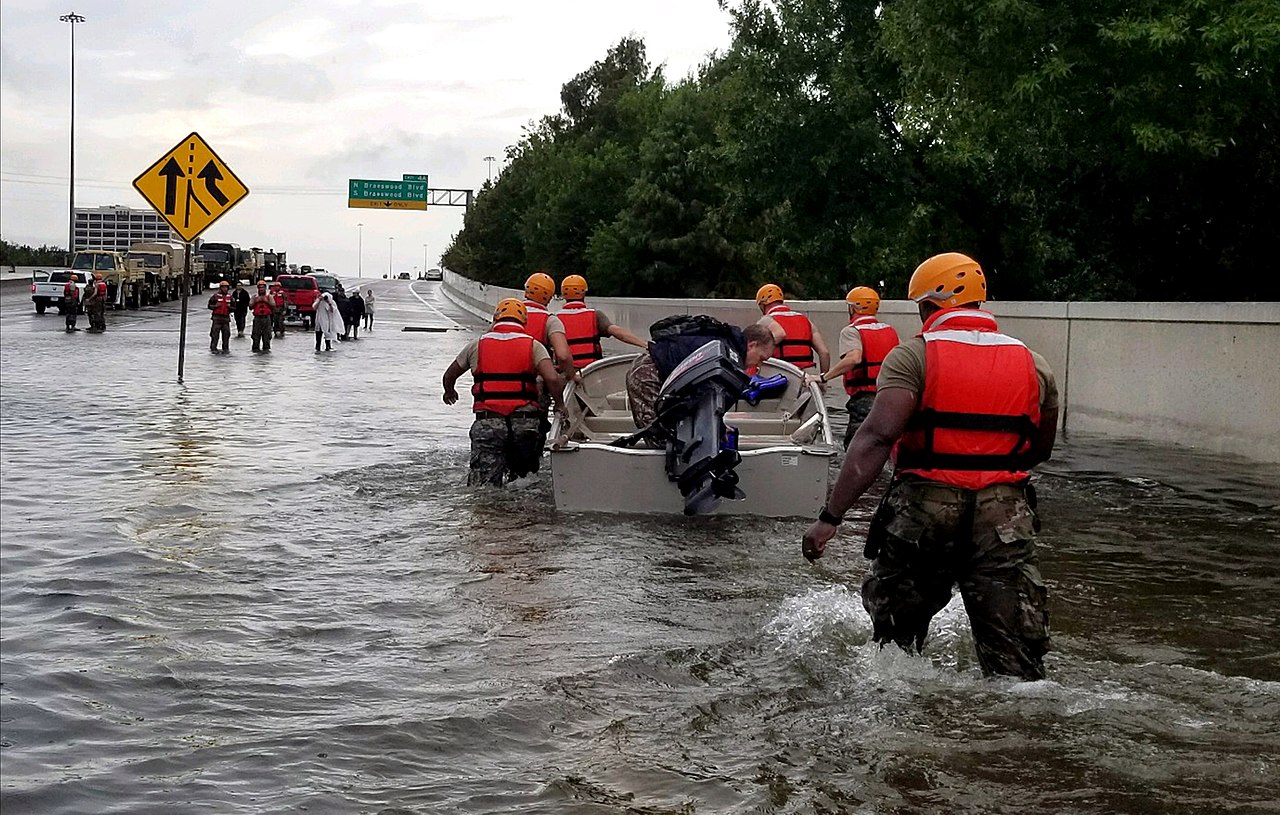
“Federal and state mobile command is currently about 200 people, who are working elbow-to-elbow, starting in Corpus Christi and moving east with primary responsibility of the health and safety of those affected by Hurricane Harvey. As we continue to respond to this natural disaster and its devastating effects on the people of Texas, the biggest threat to public health at this time is ensuring they have access to safe drinking water and ensuring waste water systems are being monitored, tested for safety and managed appropriately.”U.S. Army photo by 1st Lt. Zachary West, Wikimedia Commons Images.

Tuesday, August 1, 2017
Harmful algal blooms in Gulf of Mexico heighten environmental concern post BP spill
Harmful algal blooms can suck the oxygen out of the water column and mean certain death for fish, marine animals and birds, and cause toxic effects for people and local economies.
NOAA's Center for Operational Oceanographic Products and Services is providing routine HAB forecasts to help members of the public make informed decisions when a bloom is temporarily affecting their area. The forecasts also aid people responsible for responding to bloom impacts, according to NOAA's website.
Gulf of Mexico HAB Forecast - CO-OPS issues forecasts twice a week for the eastern and western Gulf of Mexico after confirmation of a HAB of the red tide species, Karenia brevis, and once weekly during the inactive bloom season. Red tide is the name for algal bloom when it is caused by a few species of dinoflagellates, a kind of aggressive plankton, and the bloom takes on a reddish color.
A bloom of some dinoflagellates can result in a discoloration of the water column (red tide), which can cause shellfish poisoning if humans consume contaminated shellfish. Some dinoflagellates also exhibit bioluminescence—primarily emitting blue-green light.
Currently, areas of the Gulf such as Padre Island in South Texas have experienced red tide, which can affect breathing quality for beach combers and kill marine life in the area. As seen in this photo, algal blooms can contribute to what is called a dead zone, an area of hypoxia. Some dead zones occur naturally, but more and more this lack of oxygen stems from human causes - chemical runoff, for example, and the contribution to oxygen-depleting algal bloom. PHOTO: Wikimedia Commons Images, NOAA, https://commons.wikimedia.org/wiki/File%3AGulf_dead_zone.jpg.

Sunday, July 16, 2017
Time to comment on priorities for restoring the Gulf, says RESTORE Council
The BP oil spill that began on April 20, 2010 and lasted 87 days, gushed 200 million gallons of crude oil into the Gulf of Mexico off the coast of Louisiana. Further tarnishing the ecosystem occurred following generous air drops of the dispersant Corexit around the area of Barataria Bay and in other affected regions, called "zones". Birds, turtles, dolphins, and people were sickened by the horrific spill and the dispersant effects. Coral in the Gulf is still suffering, an additional pummeling besides the blight of climate change.
Now it's time for people in the Gulf, those most affected by this disaster, to voice their pain and share their experiences.
The Gulf Coast Ecosystem Restoration Council has announced the availability of the Draft 2017 Funded Priorities List: Comprehensive Commitment and Planning Support in accordance with the Resources and Ecosystems Sustainability, Tourist Opportunities, and Revived Economies of the Gulf States Act (RESTORE Act).
"In the draft CPS FPL, the Council proposes to provide its members with funding to enhance collaboration, coordination, public engagement and use of best available science needed to make efficient use of Gulf restoration funds resulting from the Deepwater Horizon oil spill. These awards will support the Council’s commitment to a coordinated approach to ecosystem restoration, as called for in the Comprehensive Plan Update 2016: Restoring the Gulf Coast’s Ecosystem and Economy. The draft CPS FPL is now available for public and Tribal review and comment at www.restorethegulf.gov," they wrote in a press release issued July 13.
 To ensure consideration, the Council must receive written comments on the 2017 Draft Funded Priorities List: Comprehensive Commitment and Planning Support by 11:59pm MT August 14, 2017.
Further, the second of two informational webinars will be conducted July 25 (the first was on July 13). You may register for the webinar in advance. Once registered, a link to access the webinar will be sent to the email address you provide:
July 25, 2017 at 2:00 pm Central Time [Webinar Registration Link]: https://register.gotowebinar.com/register/6303399390784342017
Please Note: all questions and comments typed will be considered as a public comment and will be part of the public record. This includes your name, e-mail, and any other information you provide.
Attendees will not have the ability to ask questions orally. When answering these questions, Council staff will not identify the participant asking the question(s). Council staff will provide written responses to all questions as part of the response to public comments.
HOW TO COMMENT: You may submit public comments via the following methods:
Electronic Website Submission: www.restorethegulf.gov
Email: frcomments@restorethegulf.gov
Mail/Commercial Delivery to:
Gulf Coast Ecosystem Restoration Council
Attention: Draft FPL Comments
Hale Boggs Federal Building
500 Poydras Street, Suite 1117
New Orleans, LA 70130
FOR ADDITIONAL INFORMATION: Please send questions by email to RestoreCouncil@restorethegulf.gov, or contact Keala J. Hughes at (504) 717-7235.
To ensure consideration, the Council must receive written comments on the 2017 Draft Funded Priorities List: Comprehensive Commitment and Planning Support by 11:59pm MT August 14, 2017.
Further, the second of two informational webinars will be conducted July 25 (the first was on July 13). You may register for the webinar in advance. Once registered, a link to access the webinar will be sent to the email address you provide:
July 25, 2017 at 2:00 pm Central Time [Webinar Registration Link]: https://register.gotowebinar.com/register/6303399390784342017
Please Note: all questions and comments typed will be considered as a public comment and will be part of the public record. This includes your name, e-mail, and any other information you provide.
Attendees will not have the ability to ask questions orally. When answering these questions, Council staff will not identify the participant asking the question(s). Council staff will provide written responses to all questions as part of the response to public comments.
HOW TO COMMENT: You may submit public comments via the following methods:
Electronic Website Submission: www.restorethegulf.gov
Email: frcomments@restorethegulf.gov
Mail/Commercial Delivery to:
Gulf Coast Ecosystem Restoration Council
Attention: Draft FPL Comments
Hale Boggs Federal Building
500 Poydras Street, Suite 1117
New Orleans, LA 70130
FOR ADDITIONAL INFORMATION: Please send questions by email to RestoreCouncil@restorethegulf.gov, or contact Keala J. Hughes at (504) 717-7235.

Photo: Courtesy of Wikimedia Commons Images - Washing an oiled gannet, a victim of the BP oil spill, May 1, 2010
Thursday, June 8, 2017
World Oceans Day: The Florida Aquarium Rescues and Releases Rehabilitated Sea Turtles


Thursday, June 1, 2017
Trump provokes fiery response to Paris climate deal exit
It had just been a few hours since U.S. President Donald Trump cheerily announced America's withdrawl from the Paris climate agreement when the press releases and statements started to roll into my e-mail box. I can't even keep up with them all.
In case you missed it, or don't know what the Paris Agreement is, it's a deal struck by 195 nations to curtail greenhouse gases and keep temperature rise below pre-industrial levels at 2 degrees Celsius, or 3.6 degrees Fahrenheit. And in case you haven't stepped outside the past few years, every year has gotten warmer than the one before it. Cities are threatened by sea level rise all over the world. Famine, drought, hurricanes.
With so much pressing evidence of the horrors of climate change, how can the leader of the free world make such a decision? Like all decisions Trump makes, it reeked of being "all business" - except ...
There was Elon Musk, Tesla and SpaceX founder, who tweeted, "Am departing presidential councils. Climate change is real. Leaving Paris is not good for America or the world." And there were the flurry of businesses who'd already endorsed the accord - even BP (as in the Gulf oil spill), even Exxon (as in their former CEO is now the secretary of state...say what?).
Here's a snippet of what's in my in-box:
- from Rainforest Action Network Executive Director Lindsey Allen:
"The Trump administration’s decision to pull out of the groundbreaking Paris Climate Accord is as unsurprising as it is ignorant.
Flying in the face of all credible science on climate change, this decision threatens to return the United States to the age of choking smog, flammable lakes, and a regressive and hopeless energy infrastructure.
Nearly every decision from this administration has prioritized shortsighted corporate profits over human rights, Indigenous rights, civil rights and the future of our forests, our climate and our planet. From gutting public education to privatized prisons to stripping away environmental regulations to maximize fossil fuel profits, this administration has been one long demonstration of naked greed and corporate giveaways."
- And from Hispanic Federation:
“President Trump has turned his back on an unprecedented and urgent global agreement. Perhaps more than any of Trump’s latest actions, exiting this agreement carries the risk of widespread and lasting damage – not just to the planet and future generations, but to our country’s standing in the world.
Scientists have been warning for years that a rise in global average temperature will mean widespread stresses on food, water, and a harmful increase in sea level. Moreover, many states that are home to the country’s largest Latino communities are ground zero for the impacts of climate change, including extreme heat, drought, water-borne illnesses, and other infectious diseases. Latino communities in the U.S. already face disproportionate rates of respiratory and cardiovascular disease. Trump’s decision to ignore the science will compound the conflict and suffering that disproportionately affect already vulnerable communities, including immigrants and Latinos.
Cities like New York have pledged to uphold the underlying tenets of the Paris Climate Accord regardless of the President’s decision. We urge other cities and states to do the same and take measures to protect the planet and protect public health by making existing federal clean air, climate, clean water, worker safety, and endangered species standards enforceable under state and local law. If our federal government will not prioritize protecting the environment and public health, then we must look to our local leaders to do so.
Ultimately though, to avert the worst of these consequences, we need global coordination to solve the toughest problem humanity has ever faced. The U.S. is the second greatest polluter in the world, and our leadership was welcomed when the Paris Agreement was crafted two years ago. Since then, it has been agreed to by 195 countries and ratified by 147 to date. By exiting the climate agreement, Trump has severely damaged our standing as a global leader on arguably the most important issue affecting our planet, and has endangered our ability to prevent catastrophe and widespread human suffering on a global scale.”
More tomorrow.
PHOTO: Via Wikimedia Commons Images, Michael Vadon.
all over the world. Famine, drought, hurricanes.
With so much pressing evidence of the horrors of climate change, how can the leader of the free world make such a decision? Like all decisions Trump makes, it reeked of being "all business" - except ...
There was Elon Musk, Tesla and SpaceX founder, who tweeted, "Am departing presidential councils. Climate change is real. Leaving Paris is not good for America or the world." And there were the flurry of businesses who'd already endorsed the accord - even BP (as in the Gulf oil spill), even Exxon (as in their former CEO is now the secretary of state...say what?).
Here's a snippet of what's in my in-box:
- from Rainforest Action Network Executive Director Lindsey Allen:
"The Trump administration’s decision to pull out of the groundbreaking Paris Climate Accord is as unsurprising as it is ignorant.
Flying in the face of all credible science on climate change, this decision threatens to return the United States to the age of choking smog, flammable lakes, and a regressive and hopeless energy infrastructure.
Nearly every decision from this administration has prioritized shortsighted corporate profits over human rights, Indigenous rights, civil rights and the future of our forests, our climate and our planet. From gutting public education to privatized prisons to stripping away environmental regulations to maximize fossil fuel profits, this administration has been one long demonstration of naked greed and corporate giveaways."
- And from Hispanic Federation:
“President Trump has turned his back on an unprecedented and urgent global agreement. Perhaps more than any of Trump’s latest actions, exiting this agreement carries the risk of widespread and lasting damage – not just to the planet and future generations, but to our country’s standing in the world.
Scientists have been warning for years that a rise in global average temperature will mean widespread stresses on food, water, and a harmful increase in sea level. Moreover, many states that are home to the country’s largest Latino communities are ground zero for the impacts of climate change, including extreme heat, drought, water-borne illnesses, and other infectious diseases. Latino communities in the U.S. already face disproportionate rates of respiratory and cardiovascular disease. Trump’s decision to ignore the science will compound the conflict and suffering that disproportionately affect already vulnerable communities, including immigrants and Latinos.
Cities like New York have pledged to uphold the underlying tenets of the Paris Climate Accord regardless of the President’s decision. We urge other cities and states to do the same and take measures to protect the planet and protect public health by making existing federal clean air, climate, clean water, worker safety, and endangered species standards enforceable under state and local law. If our federal government will not prioritize protecting the environment and public health, then we must look to our local leaders to do so.
Ultimately though, to avert the worst of these consequences, we need global coordination to solve the toughest problem humanity has ever faced. The U.S. is the second greatest polluter in the world, and our leadership was welcomed when the Paris Agreement was crafted two years ago. Since then, it has been agreed to by 195 countries and ratified by 147 to date. By exiting the climate agreement, Trump has severely damaged our standing as a global leader on arguably the most important issue affecting our planet, and has endangered our ability to prevent catastrophe and widespread human suffering on a global scale.”
More tomorrow.
PHOTO: Via Wikimedia Commons Images, Michael Vadon.
 all over the world. Famine, drought, hurricanes.
With so much pressing evidence of the horrors of climate change, how can the leader of the free world make such a decision? Like all decisions Trump makes, it reeked of being "all business" - except ...
There was Elon Musk, Tesla and SpaceX founder, who tweeted, "Am departing presidential councils. Climate change is real. Leaving Paris is not good for America or the world." And there were the flurry of businesses who'd already endorsed the accord - even BP (as in the Gulf oil spill), even Exxon (as in their former CEO is now the secretary of state...say what?).
Here's a snippet of what's in my in-box:
- from Rainforest Action Network Executive Director Lindsey Allen:
"The Trump administration’s decision to pull out of the groundbreaking Paris Climate Accord is as unsurprising as it is ignorant.
Flying in the face of all credible science on climate change, this decision threatens to return the United States to the age of choking smog, flammable lakes, and a regressive and hopeless energy infrastructure.
Nearly every decision from this administration has prioritized shortsighted corporate profits over human rights, Indigenous rights, civil rights and the future of our forests, our climate and our planet. From gutting public education to privatized prisons to stripping away environmental regulations to maximize fossil fuel profits, this administration has been one long demonstration of naked greed and corporate giveaways."
- And from Hispanic Federation:
“President Trump has turned his back on an unprecedented and urgent global agreement. Perhaps more than any of Trump’s latest actions, exiting this agreement carries the risk of widespread and lasting damage – not just to the planet and future generations, but to our country’s standing in the world.
Scientists have been warning for years that a rise in global average temperature will mean widespread stresses on food, water, and a harmful increase in sea level. Moreover, many states that are home to the country’s largest Latino communities are ground zero for the impacts of climate change, including extreme heat, drought, water-borne illnesses, and other infectious diseases. Latino communities in the U.S. already face disproportionate rates of respiratory and cardiovascular disease. Trump’s decision to ignore the science will compound the conflict and suffering that disproportionately affect already vulnerable communities, including immigrants and Latinos.
Cities like New York have pledged to uphold the underlying tenets of the Paris Climate Accord regardless of the President’s decision. We urge other cities and states to do the same and take measures to protect the planet and protect public health by making existing federal clean air, climate, clean water, worker safety, and endangered species standards enforceable under state and local law. If our federal government will not prioritize protecting the environment and public health, then we must look to our local leaders to do so.
Ultimately though, to avert the worst of these consequences, we need global coordination to solve the toughest problem humanity has ever faced. The U.S. is the second greatest polluter in the world, and our leadership was welcomed when the Paris Agreement was crafted two years ago. Since then, it has been agreed to by 195 countries and ratified by 147 to date. By exiting the climate agreement, Trump has severely damaged our standing as a global leader on arguably the most important issue affecting our planet, and has endangered our ability to prevent catastrophe and widespread human suffering on a global scale.”
More tomorrow.
PHOTO: Via Wikimedia Commons Images, Michael Vadon.
all over the world. Famine, drought, hurricanes.
With so much pressing evidence of the horrors of climate change, how can the leader of the free world make such a decision? Like all decisions Trump makes, it reeked of being "all business" - except ...
There was Elon Musk, Tesla and SpaceX founder, who tweeted, "Am departing presidential councils. Climate change is real. Leaving Paris is not good for America or the world." And there were the flurry of businesses who'd already endorsed the accord - even BP (as in the Gulf oil spill), even Exxon (as in their former CEO is now the secretary of state...say what?).
Here's a snippet of what's in my in-box:
- from Rainforest Action Network Executive Director Lindsey Allen:
"The Trump administration’s decision to pull out of the groundbreaking Paris Climate Accord is as unsurprising as it is ignorant.
Flying in the face of all credible science on climate change, this decision threatens to return the United States to the age of choking smog, flammable lakes, and a regressive and hopeless energy infrastructure.
Nearly every decision from this administration has prioritized shortsighted corporate profits over human rights, Indigenous rights, civil rights and the future of our forests, our climate and our planet. From gutting public education to privatized prisons to stripping away environmental regulations to maximize fossil fuel profits, this administration has been one long demonstration of naked greed and corporate giveaways."
- And from Hispanic Federation:
“President Trump has turned his back on an unprecedented and urgent global agreement. Perhaps more than any of Trump’s latest actions, exiting this agreement carries the risk of widespread and lasting damage – not just to the planet and future generations, but to our country’s standing in the world.
Scientists have been warning for years that a rise in global average temperature will mean widespread stresses on food, water, and a harmful increase in sea level. Moreover, many states that are home to the country’s largest Latino communities are ground zero for the impacts of climate change, including extreme heat, drought, water-borne illnesses, and other infectious diseases. Latino communities in the U.S. already face disproportionate rates of respiratory and cardiovascular disease. Trump’s decision to ignore the science will compound the conflict and suffering that disproportionately affect already vulnerable communities, including immigrants and Latinos.
Cities like New York have pledged to uphold the underlying tenets of the Paris Climate Accord regardless of the President’s decision. We urge other cities and states to do the same and take measures to protect the planet and protect public health by making existing federal clean air, climate, clean water, worker safety, and endangered species standards enforceable under state and local law. If our federal government will not prioritize protecting the environment and public health, then we must look to our local leaders to do so.
Ultimately though, to avert the worst of these consequences, we need global coordination to solve the toughest problem humanity has ever faced. The U.S. is the second greatest polluter in the world, and our leadership was welcomed when the Paris Agreement was crafted two years ago. Since then, it has been agreed to by 195 countries and ratified by 147 to date. By exiting the climate agreement, Trump has severely damaged our standing as a global leader on arguably the most important issue affecting our planet, and has endangered our ability to prevent catastrophe and widespread human suffering on a global scale.”
More tomorrow.
PHOTO: Via Wikimedia Commons Images, Michael Vadon.
REPOST from 2016: In Japan, US and G7 nations pledge shuttering of fossil fuel subsidies by 2025
The following article originally was published on Examiner.com, May 28, 2016 Greenpeace has made its clean energy demands clear to G7 leaders who are meeting nearby at their Elmau summit. After a G7 pledge to get rid of carbon fuels by the end of the century, they ultimately gave them a rare thumbs up.
At the G7 2016 Ise-Shima Summit in Kashikojima, Japan President Barack Obama, along with leaders from countries around the world, officially pledged this week to end fossil fuel subsidies by 2025. The event was officiated by Japan's prime minister, Shinzo Abe.
Universities and companies worldwide have been under increasing pressure to divest interests in fossil fuels. The announcement today will fuel that aim, albeit in a non-carbon centric fashion.
In a lengthy document called "G7 Ise-Shima Leaders' Declaration, May 26-27, 2016", leaders of the EU, Japan, US, Germany, UK, France, and Italy urge all nations to end support for coal, oil, and gas by 2025.
They said in part that following the December Paris Agreement on climate change, the nations will implement their commitments. "The G7 has a special responsibility to lead international efforts to tackle these challenges," they stated regarded climate change and its various impacts. "Today, we have demonstrated our capacity to make tangible progress on a broad range of economic, security, and development policy issues."
Highlights of their 32-page statement also include:
- That this is the first time G7 nations have set a deadline to end most fossil fuel subsidies.
- That these nations will "commit to further investment in areas conducive to economic growth, such as environment, energy, digital economy, human resource development, education, science, and technology."
This week, the president also spoke in Japan regarding the bombings at Hiroshima and Nagasaki at the end of World War II, offering sympathethy but not a formal apology.
...
To read the document, please see: http://www.mofa.go.jp/files/000160266.pdf
Photo: Wikimedia Commons
Greenpeace has made its clean energy demands clear to G7 leaders who are meeting nearby at their Elmau summit. After a G7 pledge to get rid of carbon fuels by the end of the century, they ultimately gave them a rare thumbs up.
At the G7 2016 Ise-Shima Summit in Kashikojima, Japan President Barack Obama, along with leaders from countries around the world, officially pledged this week to end fossil fuel subsidies by 2025. The event was officiated by Japan's prime minister, Shinzo Abe.
Universities and companies worldwide have been under increasing pressure to divest interests in fossil fuels. The announcement today will fuel that aim, albeit in a non-carbon centric fashion.
In a lengthy document called "G7 Ise-Shima Leaders' Declaration, May 26-27, 2016", leaders of the EU, Japan, US, Germany, UK, France, and Italy urge all nations to end support for coal, oil, and gas by 2025.
They said in part that following the December Paris Agreement on climate change, the nations will implement their commitments. "The G7 has a special responsibility to lead international efforts to tackle these challenges," they stated regarded climate change and its various impacts. "Today, we have demonstrated our capacity to make tangible progress on a broad range of economic, security, and development policy issues."
Highlights of their 32-page statement also include:
- That this is the first time G7 nations have set a deadline to end most fossil fuel subsidies.
- That these nations will "commit to further investment in areas conducive to economic growth, such as environment, energy, digital economy, human resource development, education, science, and technology."
This week, the president also spoke in Japan regarding the bombings at Hiroshima and Nagasaki at the end of World War II, offering sympathethy but not a formal apology.
...
To read the document, please see: http://www.mofa.go.jp/files/000160266.pdf
Photo: Wikimedia Commons
 Greenpeace has made its clean energy demands clear to G7 leaders who are meeting nearby at their Elmau summit. After a G7 pledge to get rid of carbon fuels by the end of the century, they ultimately gave them a rare thumbs up.
At the G7 2016 Ise-Shima Summit in Kashikojima, Japan President Barack Obama, along with leaders from countries around the world, officially pledged this week to end fossil fuel subsidies by 2025. The event was officiated by Japan's prime minister, Shinzo Abe.
Universities and companies worldwide have been under increasing pressure to divest interests in fossil fuels. The announcement today will fuel that aim, albeit in a non-carbon centric fashion.
In a lengthy document called "G7 Ise-Shima Leaders' Declaration, May 26-27, 2016", leaders of the EU, Japan, US, Germany, UK, France, and Italy urge all nations to end support for coal, oil, and gas by 2025.
They said in part that following the December Paris Agreement on climate change, the nations will implement their commitments. "The G7 has a special responsibility to lead international efforts to tackle these challenges," they stated regarded climate change and its various impacts. "Today, we have demonstrated our capacity to make tangible progress on a broad range of economic, security, and development policy issues."
Highlights of their 32-page statement also include:
- That this is the first time G7 nations have set a deadline to end most fossil fuel subsidies.
- That these nations will "commit to further investment in areas conducive to economic growth, such as environment, energy, digital economy, human resource development, education, science, and technology."
This week, the president also spoke in Japan regarding the bombings at Hiroshima and Nagasaki at the end of World War II, offering sympathethy but not a formal apology.
...
To read the document, please see: http://www.mofa.go.jp/files/000160266.pdf
Photo: Wikimedia Commons
Greenpeace has made its clean energy demands clear to G7 leaders who are meeting nearby at their Elmau summit. After a G7 pledge to get rid of carbon fuels by the end of the century, they ultimately gave them a rare thumbs up.
At the G7 2016 Ise-Shima Summit in Kashikojima, Japan President Barack Obama, along with leaders from countries around the world, officially pledged this week to end fossil fuel subsidies by 2025. The event was officiated by Japan's prime minister, Shinzo Abe.
Universities and companies worldwide have been under increasing pressure to divest interests in fossil fuels. The announcement today will fuel that aim, albeit in a non-carbon centric fashion.
In a lengthy document called "G7 Ise-Shima Leaders' Declaration, May 26-27, 2016", leaders of the EU, Japan, US, Germany, UK, France, and Italy urge all nations to end support for coal, oil, and gas by 2025.
They said in part that following the December Paris Agreement on climate change, the nations will implement their commitments. "The G7 has a special responsibility to lead international efforts to tackle these challenges," they stated regarded climate change and its various impacts. "Today, we have demonstrated our capacity to make tangible progress on a broad range of economic, security, and development policy issues."
Highlights of their 32-page statement also include:
- That this is the first time G7 nations have set a deadline to end most fossil fuel subsidies.
- That these nations will "commit to further investment in areas conducive to economic growth, such as environment, energy, digital economy, human resource development, education, science, and technology."
This week, the president also spoke in Japan regarding the bombings at Hiroshima and Nagasaki at the end of World War II, offering sympathethy but not a formal apology.
...
To read the document, please see: http://www.mofa.go.jp/files/000160266.pdf
Photo: Wikimedia Commons
Tuesday, May 9, 2017
One small pea, one giant step for protecting the planet
 I'm not exaggerating - grow one small pea and you're on your way to protecting Earth.
Visiting my mother in South Texas for several months, I had admired her garden - especially the tomatoes. Y-u-m. So pretty, so fun to spy a wee red bulb and pluck it for dinner, if I could wait that long.
So when the opportunity arose to try PittMoss (yes, you're reading that right), which uses recycled newspapers to replace the properties of peat moss and absorb less water, I was onboard. I planted black-eyed peas. Not only was it a fun project - I chose to mix about half PittMoss with dirt/mud - but it worked.
PittMoss was featured on an episode of "Shark Tank", where its inventor Mont Handley discussed the product - what the company says "was developed from seeing the degradation of important peat-lands being harvested for potting soils."
In simple terms, the recycled material is more eco-friendly than traditional peat moss, while both types are working to enhance growth by using less water. The product is supposed to offer an added benefit, purportedly pumping nutrients back into the soil.
I enjoyed my first experience planting anything by myself, but being my first time, don't have enough to compare PittMoss to. That being said, it only took I think two weeks, maybe less, for the first black-eyed pea to appear!
The day before I was to leave Texas, I was out back watering when I jumped for joy. A pea had sprouted! Now, I should mention my mom had bought me five more pots to plant after I'd innocently thought one would be enough - thanks, Mom.
I am sad that I will not be in the garden to see more peas sprout, but happy Mom can enjoy them.
Photo: The author's black-eyed pea sprouts skyward; two still-potted plants (since planted in the soil) are in the foreground.
I'm not exaggerating - grow one small pea and you're on your way to protecting Earth.
Visiting my mother in South Texas for several months, I had admired her garden - especially the tomatoes. Y-u-m. So pretty, so fun to spy a wee red bulb and pluck it for dinner, if I could wait that long.
So when the opportunity arose to try PittMoss (yes, you're reading that right), which uses recycled newspapers to replace the properties of peat moss and absorb less water, I was onboard. I planted black-eyed peas. Not only was it a fun project - I chose to mix about half PittMoss with dirt/mud - but it worked.
PittMoss was featured on an episode of "Shark Tank", where its inventor Mont Handley discussed the product - what the company says "was developed from seeing the degradation of important peat-lands being harvested for potting soils."
In simple terms, the recycled material is more eco-friendly than traditional peat moss, while both types are working to enhance growth by using less water. The product is supposed to offer an added benefit, purportedly pumping nutrients back into the soil.
I enjoyed my first experience planting anything by myself, but being my first time, don't have enough to compare PittMoss to. That being said, it only took I think two weeks, maybe less, for the first black-eyed pea to appear!
The day before I was to leave Texas, I was out back watering when I jumped for joy. A pea had sprouted! Now, I should mention my mom had bought me five more pots to plant after I'd innocently thought one would be enough - thanks, Mom.
I am sad that I will not be in the garden to see more peas sprout, but happy Mom can enjoy them.
Photo: The author's black-eyed pea sprouts skyward; two still-potted plants (since planted in the soil) are in the foreground.
Wednesday, May 3, 2017
EPA Grant of More Than $158,000 to Support Public Drinking Water Systems in Bayou State
The U.S. Environmental Protection Agency (EPA) has awarded $158,101 to the Louisiana Department of Health and Hospitals to support public drinking water systems in the state. According to a press release issued yesterday via e-mail, the funding is part of the agency's "ongoing commitment to assist local drinking water systems in Louisiana."
A recent study by personal finance analysts at WalletHub shows that Louisiana ranks a dismal 44th for water quality.
“Providing safe, reliable drinking water takes the hard work of public servants at local, state, and federal levels,” said Acting Regional Administrator Sam Coleman. “EPA is proud to support LDHH and public water systems in achieving this goal.”
The funds will help LDHH supervise the state’s public water system, including maintaining and evaluating drinking water systems. Other activities supported by the grant include ensuring water systems comply with Safe Drinking Water Act requirements, developing and maintaining regulations, conducting surveys and assessments of water systems, and reviewing and approving water infrastructure projects.
The health department will focus the grant on the heavily touristed New Orleans, as well as Baton Rouge, Thibodaux, Lafayette, and Abita Springs.
Under the Safe Drinking Water Act, EPA assists state, territories, and tribes with their public water system supervision programs, in turn helping these systems provide reliable, safe drinking water to consumers and comply with U.S. drinking water requirements. Photo: Wikimedia Commons Images. "Cup of café au lait, beignets, milk, and water with ice, on table at original French Quarter location of Café du Monde," by Infromagation.

Thursday, April 20, 2017
Repost from 2012: Tulane's new studies punctuate ongoing research on women's health after spill
The following article first appeared on Examiner.com, June 20, 2012. Since its publication, Dr. Lichtveld has published papers, which can be read here.The story has been lightly edited.
Today, April 20, is the seventh anniversary of the tragic and massive BP oil spill in the Gulf of Mexico. Eleven men, rig workers, would lose their lives after an explosion on the Deepwater Horizon rig owned by Transocean.
Yet, while the oil spill -- that wasn't shuttered for 87 days -- was horrific enough, the U.S. in concert with BP sprayed the Gulf with nearly 2 million gallons of dispersants, dispersants banned in the very country in which they are manufactured.
This reporter has followed the story from the beginning, including having spoken to numerous individuals who were in the zones most affected.
In the original posting of this story, I ran a picture by Mario Tama of Getty Images, dated April 18, 2011. The headline was "Lorrie Williams of Ocean Springs, MS developed severe health problems from the spill including lung polyps and liver damage. She believes this and her 42-lb weight loss as of Apr 2011 was caused by the dispersants."
While the  media might focus on the recovery and how many brown pelicans were cleaned up, the deeper story is that oil is still at the bottom of the gulf and weighing the effects of oil-plus-dispersants is only beginning to show light. Scientists have proven, though, that together the mix is far more toxic than just using oil alone.
In the course of my reporting over the years, I heard then Plaquemines President Billy Nungesser explain how the EPA told them one day there would be no more spraying, only to reverse course and come back again. I heard people I respect tell me again and again that I'd have to wait until papers were published, or that choosing Corexit was the best choice at the time. It kept the oil from coming up on shore. Yes, sort of like hitting you over the head so you faint keeps you from tripping and falling into the pool.
...
Following is my story from 2012, in which I interview a prominent scientist studying the effects of the BP oil spill on women's health:
Dr. Maureen Lichtveld, Tulane's chair of environmental policy, met with this reporter a couple of weeks ago in her Canal Street office to discuss recent grants to her department.
Announced June 1, an overarching study of potential health impacts of the Deepwater Horizon disaster on coastal communities is being conducted thanks to $18.7 million from the BP spill settlement, as well as $3.7 million from the Baton Rouge Area Foundation's Fund for the Future of the Gulf, which will facilitate the evaluation of environmental health risks to seafood.
Since last July, though, Lichtveld has already been overseeing a vital three-year project paid for by a $6.5 million grant from the National Institute of Environmental Health Sciences. This one explores the potential impacts of the spill on pregnant women and females of reproductive age. Their focus is women living in Jefferson, Lafourche, Orleans and Plaquemines parishes.
Lichtveld said:
"Pregnant women are always a population of concern when there are environmental exposures, as the developing fetus may be vulnerable to even small doses of contaminants...To our knowledge, this is also the first study to examine maternal stress and anxiety related to a major oil spill and the associated effects on birth outcomes, fetal health and family-planning behavior.”
Last year's grant created the Transdisciplinary Research Consortium for Gulf Resilience on Women’s Health (or GROWH) at Tulane. It is quantifying potential exposure levels among women to environmental contaminants via seafood consumption and air emissions; studying how disasters affect reproduction choices; and exploring how the relationship between the environment and socioeconomics affect women’s health and pregnancies.
"GROWH will collaborate with vulnerable populations along the Gulf Coast to conduct transdisciplinary, community-based participatory research," the National Institutes for Health said last year.
The consortium also partners with community groups to conduct its research, partnering with communities to design the studies, Lichtveld said. These partners include Mary Queen of Vietnam Community Development Corp., Bayou Interfaith Sharing Community Organizing and Women Infant and Children (WIC) clinics in the affected parishes.
Explaining how the school is able to use funds from the first, $18.7 million grant, Lichtveld said, "the school is in a wonderfully neutral position." BP has no involvement in how Tulane manages the money since it was part of their $7.8 billion settlement on the Gulf spill, she said.
Lichtveld, who had the surreal experience of starting at Tulane shortly before Katrina hit, says she is "excited" by her work. This includes a fascinating element of the community study, which will allow her to reach high schools and train students to learn about environmental health. Then these newly environmental medicine-savvy kids will allow the community to "recruit very competively."
Someday, hopefully, these high schoolers will be the new medical professionals in the gulf, able to assess health problems resulting from spills.
###
- An earlier version of this report listed the awards in the wrong order. This version is correct.
media might focus on the recovery and how many brown pelicans were cleaned up, the deeper story is that oil is still at the bottom of the gulf and weighing the effects of oil-plus-dispersants is only beginning to show light. Scientists have proven, though, that together the mix is far more toxic than just using oil alone.
In the course of my reporting over the years, I heard then Plaquemines President Billy Nungesser explain how the EPA told them one day there would be no more spraying, only to reverse course and come back again. I heard people I respect tell me again and again that I'd have to wait until papers were published, or that choosing Corexit was the best choice at the time. It kept the oil from coming up on shore. Yes, sort of like hitting you over the head so you faint keeps you from tripping and falling into the pool.
...
Following is my story from 2012, in which I interview a prominent scientist studying the effects of the BP oil spill on women's health:
Dr. Maureen Lichtveld, Tulane's chair of environmental policy, met with this reporter a couple of weeks ago in her Canal Street office to discuss recent grants to her department.
Announced June 1, an overarching study of potential health impacts of the Deepwater Horizon disaster on coastal communities is being conducted thanks to $18.7 million from the BP spill settlement, as well as $3.7 million from the Baton Rouge Area Foundation's Fund for the Future of the Gulf, which will facilitate the evaluation of environmental health risks to seafood.
Since last July, though, Lichtveld has already been overseeing a vital three-year project paid for by a $6.5 million grant from the National Institute of Environmental Health Sciences. This one explores the potential impacts of the spill on pregnant women and females of reproductive age. Their focus is women living in Jefferson, Lafourche, Orleans and Plaquemines parishes.
Lichtveld said:
"Pregnant women are always a population of concern when there are environmental exposures, as the developing fetus may be vulnerable to even small doses of contaminants...To our knowledge, this is also the first study to examine maternal stress and anxiety related to a major oil spill and the associated effects on birth outcomes, fetal health and family-planning behavior.”
Last year's grant created the Transdisciplinary Research Consortium for Gulf Resilience on Women’s Health (or GROWH) at Tulane. It is quantifying potential exposure levels among women to environmental contaminants via seafood consumption and air emissions; studying how disasters affect reproduction choices; and exploring how the relationship between the environment and socioeconomics affect women’s health and pregnancies.
"GROWH will collaborate with vulnerable populations along the Gulf Coast to conduct transdisciplinary, community-based participatory research," the National Institutes for Health said last year.
The consortium also partners with community groups to conduct its research, partnering with communities to design the studies, Lichtveld said. These partners include Mary Queen of Vietnam Community Development Corp., Bayou Interfaith Sharing Community Organizing and Women Infant and Children (WIC) clinics in the affected parishes.
Explaining how the school is able to use funds from the first, $18.7 million grant, Lichtveld said, "the school is in a wonderfully neutral position." BP has no involvement in how Tulane manages the money since it was part of their $7.8 billion settlement on the Gulf spill, she said.
Lichtveld, who had the surreal experience of starting at Tulane shortly before Katrina hit, says she is "excited" by her work. This includes a fascinating element of the community study, which will allow her to reach high schools and train students to learn about environmental health. Then these newly environmental medicine-savvy kids will allow the community to "recruit very competively."
Someday, hopefully, these high schoolers will be the new medical professionals in the gulf, able to assess health problems resulting from spills.
###
- An earlier version of this report listed the awards in the wrong order. This version is correct.
 media might focus on the recovery and how many brown pelicans were cleaned up, the deeper story is that oil is still at the bottom of the gulf and weighing the effects of oil-plus-dispersants is only beginning to show light. Scientists have proven, though, that together the mix is far more toxic than just using oil alone.
In the course of my reporting over the years, I heard then Plaquemines President Billy Nungesser explain how the EPA told them one day there would be no more spraying, only to reverse course and come back again. I heard people I respect tell me again and again that I'd have to wait until papers were published, or that choosing Corexit was the best choice at the time. It kept the oil from coming up on shore. Yes, sort of like hitting you over the head so you faint keeps you from tripping and falling into the pool.
...
Following is my story from 2012, in which I interview a prominent scientist studying the effects of the BP oil spill on women's health:
Dr. Maureen Lichtveld, Tulane's chair of environmental policy, met with this reporter a couple of weeks ago in her Canal Street office to discuss recent grants to her department.
Announced June 1, an overarching study of potential health impacts of the Deepwater Horizon disaster on coastal communities is being conducted thanks to $18.7 million from the BP spill settlement, as well as $3.7 million from the Baton Rouge Area Foundation's Fund for the Future of the Gulf, which will facilitate the evaluation of environmental health risks to seafood.
Since last July, though, Lichtveld has already been overseeing a vital three-year project paid for by a $6.5 million grant from the National Institute of Environmental Health Sciences. This one explores the potential impacts of the spill on pregnant women and females of reproductive age. Their focus is women living in Jefferson, Lafourche, Orleans and Plaquemines parishes.
Lichtveld said:
"Pregnant women are always a population of concern when there are environmental exposures, as the developing fetus may be vulnerable to even small doses of contaminants...To our knowledge, this is also the first study to examine maternal stress and anxiety related to a major oil spill and the associated effects on birth outcomes, fetal health and family-planning behavior.”
Last year's grant created the Transdisciplinary Research Consortium for Gulf Resilience on Women’s Health (or GROWH) at Tulane. It is quantifying potential exposure levels among women to environmental contaminants via seafood consumption and air emissions; studying how disasters affect reproduction choices; and exploring how the relationship between the environment and socioeconomics affect women’s health and pregnancies.
"GROWH will collaborate with vulnerable populations along the Gulf Coast to conduct transdisciplinary, community-based participatory research," the National Institutes for Health said last year.
The consortium also partners with community groups to conduct its research, partnering with communities to design the studies, Lichtveld said. These partners include Mary Queen of Vietnam Community Development Corp., Bayou Interfaith Sharing Community Organizing and Women Infant and Children (WIC) clinics in the affected parishes.
Explaining how the school is able to use funds from the first, $18.7 million grant, Lichtveld said, "the school is in a wonderfully neutral position." BP has no involvement in how Tulane manages the money since it was part of their $7.8 billion settlement on the Gulf spill, she said.
Lichtveld, who had the surreal experience of starting at Tulane shortly before Katrina hit, says she is "excited" by her work. This includes a fascinating element of the community study, which will allow her to reach high schools and train students to learn about environmental health. Then these newly environmental medicine-savvy kids will allow the community to "recruit very competively."
Someday, hopefully, these high schoolers will be the new medical professionals in the gulf, able to assess health problems resulting from spills.
###
- An earlier version of this report listed the awards in the wrong order. This version is correct.
media might focus on the recovery and how many brown pelicans were cleaned up, the deeper story is that oil is still at the bottom of the gulf and weighing the effects of oil-plus-dispersants is only beginning to show light. Scientists have proven, though, that together the mix is far more toxic than just using oil alone.
In the course of my reporting over the years, I heard then Plaquemines President Billy Nungesser explain how the EPA told them one day there would be no more spraying, only to reverse course and come back again. I heard people I respect tell me again and again that I'd have to wait until papers were published, or that choosing Corexit was the best choice at the time. It kept the oil from coming up on shore. Yes, sort of like hitting you over the head so you faint keeps you from tripping and falling into the pool.
...
Following is my story from 2012, in which I interview a prominent scientist studying the effects of the BP oil spill on women's health:
Dr. Maureen Lichtveld, Tulane's chair of environmental policy, met with this reporter a couple of weeks ago in her Canal Street office to discuss recent grants to her department.
Announced June 1, an overarching study of potential health impacts of the Deepwater Horizon disaster on coastal communities is being conducted thanks to $18.7 million from the BP spill settlement, as well as $3.7 million from the Baton Rouge Area Foundation's Fund for the Future of the Gulf, which will facilitate the evaluation of environmental health risks to seafood.
Since last July, though, Lichtveld has already been overseeing a vital three-year project paid for by a $6.5 million grant from the National Institute of Environmental Health Sciences. This one explores the potential impacts of the spill on pregnant women and females of reproductive age. Their focus is women living in Jefferson, Lafourche, Orleans and Plaquemines parishes.
Lichtveld said:
"Pregnant women are always a population of concern when there are environmental exposures, as the developing fetus may be vulnerable to even small doses of contaminants...To our knowledge, this is also the first study to examine maternal stress and anxiety related to a major oil spill and the associated effects on birth outcomes, fetal health and family-planning behavior.”
Last year's grant created the Transdisciplinary Research Consortium for Gulf Resilience on Women’s Health (or GROWH) at Tulane. It is quantifying potential exposure levels among women to environmental contaminants via seafood consumption and air emissions; studying how disasters affect reproduction choices; and exploring how the relationship between the environment and socioeconomics affect women’s health and pregnancies.
"GROWH will collaborate with vulnerable populations along the Gulf Coast to conduct transdisciplinary, community-based participatory research," the National Institutes for Health said last year.
The consortium also partners with community groups to conduct its research, partnering with communities to design the studies, Lichtveld said. These partners include Mary Queen of Vietnam Community Development Corp., Bayou Interfaith Sharing Community Organizing and Women Infant and Children (WIC) clinics in the affected parishes.
Explaining how the school is able to use funds from the first, $18.7 million grant, Lichtveld said, "the school is in a wonderfully neutral position." BP has no involvement in how Tulane manages the money since it was part of their $7.8 billion settlement on the Gulf spill, she said.
Lichtveld, who had the surreal experience of starting at Tulane shortly before Katrina hit, says she is "excited" by her work. This includes a fascinating element of the community study, which will allow her to reach high schools and train students to learn about environmental health. Then these newly environmental medicine-savvy kids will allow the community to "recruit very competively."
Someday, hopefully, these high schoolers will be the new medical professionals in the gulf, able to assess health problems resulting from spills.
###
- An earlier version of this report listed the awards in the wrong order. This version is correct.
PHOTO: May 2, 2010 - U.S. Coast Guard Commandant Admiral Thad Allen, then National Incident Commander, and then EPA Administrator Lisa Jackson, briefed President Barack Obama about the situation along the Gulf Coast following the BP oil spill at the Coast Guard Venice Center in Venice, La.. Official White House Photo by Pete Souza; Author: USEPA Environmental-Protection-Agency
Sunday, April 16, 2017
Repost from 2015: BP oil spill 5 years later: a young family struggles with oil, Corexit effects
The following article was published April 19, 2015 on Examiner.com. It's since been very lightly edited.
For one young family living in Long Beach, Miss., the Macondo well blowout and BP oil spill that began April 20, 2010 is more than a footnote in our nation's tragic environmental history.
For Christina Tillman and husband Derek, now raising three boys just a few miles from where they lived in coastal Pass Christian, Mississippi, everyday life means continual trips to the doctor and worries about their children's and their own long-term health.
While no one in the family worked on the Vessels of Opportunity, like many residents there, the toxic effects following the Macondo well blowout were horrific.
At the time, the couple's only son, Gaven, was 2. Prior to the BP oil spill, his mom says he was a very healthy little boy. But afterwards, she says, "We went to the beach every now and then, [and later] chemicals found in his body showed a lot of the symptoms and signs [of the toxicity of the spill.]"
Indeed. She shared the boy's bloodwork results with this reporter, which show that on Dec. 15, 2010, ethylbenzene in the amount of 0.1" to 0.3" ppb was detected, placing him in the 95th percentile for volatile solvents.
It cost the couple about $450 for this test, one of a flurry of bills they'd incur over the years as they struggled to handle not only the physical but the financial and emotional tolls of post-spill life.
Christina says they left Pass Christian because it was evident that it was toxic to live there. Not only did she and her family - including mother-in-law Shirley Tillman, who's spoken out frequently to the press and shared pictures of dead turtles she found on the beach - feel this, but so did visitors, who'd ask "what that smell was."
"We could smell it – it was the day after the explosion; they hadn’t even reported anything about it on our local news station," she says, echoing a comment from Daisy Seal, who underwent 13 miscarriages and whose child has experienced kidney failure.
“I remember going outside and smelling something that smelled like burning oil. I had commented about it – and for about 30 seconds that night they mentioned something about this thing exploding," she says.
And the dangers didn't just issue from the petroleum products, but from the copious amounts of Corexit being air dropped along the Gulf.
Tillman is a medical professional who has worked in the operating room as a surgical technologist, meaning she hands instruments to the surgeon. Now she is an instructor at Mississippi Gulf Coast Community College.
She says that after the spill, that autumn, they were seeing a marked number of patients in for respiratory distress. Then they saw an uptick in the number of surgical cancellations in the pediatrics unit where she worked in Mississippi.
"On our particular surgery days, when it all first came about, the children and elderly started to get sick, and we would probably see anywhere from 300 to 500 pediatric patients a day in Gulfport. This was late 2010, early 2011," she says.
She says she saw a "drastic drop" in the number of surgeries that could be performed due to cancellations. Where they would do about nine to ten surgeries on a surgical day, that number was cut basically in half. Sometimes on a half-day workday there weren't any surgeries, which was highly unusual.
“The drastic drop lasted a good six months. It started kind of decreasing gradually from I would say probably May, slowly started to decrease and there was a huge drop and it remained for a good halfway to the end of 2011," she says.
"But I will tell you we never made it all the way back up the chain when I left in December 2011 because I just remember when I first started working there it was fast paced ... we had a full case load and were trying to get 'em in and out."
Meanwhile, the Tillmans were dealing with their own health problems - Gaven's issues and then the health battles of the children who were to come: Maddox, now 3, and little Declan, 3 months. Big brother Gaven is now 6, going on 7.
Following is the edited version of the list of symptoms her family sent to this reporter:
Derek (husband/father):
"His symptoms started severely around November (2010) and lasted about three to four months. These symptoms were a lot like what you would experience with severe allergies, a cold, or flu," she says.
• Severe nasal congestion and sinus inflammation (rhinitis and sinusitis)
• Severe cough and chest congestion
• Sore throat and extreme redness
• Tonsilitis, bronchitis, and laryngitis
• Red, watery, burning eyes and irritation
• Nausea and vomiting
• Dizziness
• Severe body aches
• Sores and lesions in the mouth and throat
• Severe headaches
"None of his sympoms ever lead to infections, so he never really had a fever. Maybe once, when his symptoms were at their most extreme in November. Once they went away a few months later; he was better than the rest of us. Derek has asthma, his asthmatic symptoms were very severe during this period," says Christina.
Christina (wife/mother):
"Severe symptoms started around October to November and lasted for almost a year off and on," she says. "I was sick for a good six months ongoing, after that it would go away and return. A lot of the symptoms [were] the same as Derek's, but lasted longer."
• Severe nasal congestion and sinus inflammation (rhinitis and sinusitis)
• Severe cough and chest congestion
• Sore throat and extreme redness
• Tonsilitis, bronchitis, and laryngitis
• Red, watery, burning eyes and irritation; "blood vessels would burst in my eyes and it would hurt"
• Nausea and vomiting
• Dizziness
• Severe body aches
• Sores and lesions in the mouth and throat
• Rashes that hurt and "looked like the map of the US all over the body"
• Fever
• Severe headaches and migraines
"The sinus congestion was unlike anything I had or have ever experienced. Your head would feel like it was literally going to explode from the pressure built up inside it. Your eyes would even feel like they were about to pop out of your head. It was horrible," she shares.
Gaven (eldest boy):
"This poor baby got the worst of everything. I'm going to list what I can remember of all his problems here, but I'm also going to attach what I had written up about his experience in case I miss anything [which was a very long list of symptoms.]," she says. "There was so much in his case. I was looking at his medical records and his symptoms started mildly in July, became more moderate in September, and were severe starting in September. His symptoms were ongoing for a year and a half, and lasted just over two years all together..."
• Severe nasal congestion and sinus inflammation (rhinitis and sinusitis)
• Severe cough and chest congestion
• Sore throat and extreme redness
• Tonsilitis, bronchitis, and laryngitis
• Red, watery, burning eyes and irritation; blood vessels would burst in his eyes and it would hurt
• Nausea and vomiting
• Dizziness
• Severe body aches
• Sores and lesions in the mouth and throat
• Several different types of rashes all over the body; sometimes splotchy, sometimes patchy, etc. His would even turn into these little lesions as well. One time they even thought he might have the measles because the rash he had seemed like the one associated with it.
• Fever (sometimes as high as 104 and 104.5)
• Severe headaches
• Ear infections
• Leukocytosis
• Sleep apnea
Maddox (middle boy):
"Around May of 2013 he started to experience some very mild symptoms associated with allergies. The problem was, and what brought major concern with Dr. Cupp [the family pediatrician], was the fact that they were a little more ongoing than she liked and she noticed that all of his lymph nodes were very inflamed. They did some blood tests and his white blood cell count was extremely high. She was concerned that he might have cancer, leukemia particularly," Christina says.
After further testing it was discovered that he did not and she was never able to pinpoint what was the cause of any of it, says Christina. In September of 2014, the same thing happened and he "had a mass that formed on his leg that was removed by surgery. They thought it was an infection, like staph, but it wasn't. That's when they became concerned with cancer once more and he was tested for leukemia again and also lymphoma. He has been doing fine since November of 2014 and she will test him again later this year just in case," Christina says.
Declan (the baby): "A few days after Declan was born, he started having trouble feeding and breathing," Christina says. "Of course this was very concerning for us, so I approached his pediatrician with some videos of what was happening. In turn, his pediatrician became concerned as well. She sent him to a specialist at Ochsner's who had to do an endoscopy on him (while I had to hold him in my lap). That day, at two weeks of age, Declan was diagnosed with a few different disorders: one is called laryngotracheomalacia, which affects his feeding and his breathing." She says his epiglottis did not form correctly; "instead of being like the hard cartilage it should be, it's very soft and flappy." It also doesn't fully cover as it should, which can cause him to aspirate because when feeds he can take the fluid into his lungs..." Eldest son had VOC in blood Although Christina and her husband, a former minor league ball player who works as a plumber, also experienced problems, like most parents the focus was on the kids. In 2010, that child was Gaven, and with his severe symptoms and with the advice of toxicologist Rikki Ott, the boy was taken in for a blood test. Derek's mom, Shirley Tillman, has been an activist following the spill, sharing pictures of dead, washed-up turtles that ended up published in international media. Ott has been fighting the use of dispersants such as Corexit, and is an Exxon Valdez spill survivor. Sadly, the results of Gaven's blood test showed the presence of ethylbenzene when samples were taken Dec. 15, 2010. Ethylbenzene, according to the Agency for Toxic Substances & Disease Registry, has developmental effects - meaning it can affect organs that are developing, as well as the nervous system. It is a "colorless, flammable liquid that smells like gasoline. It is found in natural products such as coal tar and petroleum and is also found in manufactured products such as inks, insecticides, and paints..." Going forward: it's not 'all better' Christina and Derek have obviously been blessed with the births of not just one or two, but three boys. Their ability to maneuver the battery of medical tests and procedures, driving their boys to doctors far and near, some of whom thought Christina was crazy for drawing a link to the spill, is nothing short of remarkable. Christina has thought all along that Corexit is dangerous, but mentioning this to some people resulted in them looking at her "like I'd seen a UFO." Asked to comment on Corexit's effects in particular, the EPA did not get back to this reporter by press time. The million-dollar-question, of course, is why was the Gulf of Mexico a huge litmus test for a toxic chemical banned in the very country in which BP operates? Asked to comment on Corexit's effects on the Gulf, a BP spokesman shared the following written statement from the company: "BP’s use of dispersants during the Deepwater Horizon response was coordinated with, and approved by, US federal agencies, including the US Environmental Protection Agency (EPA) and the US Coast Guard. Throughout the response, BP worked closely with US Occupational Safety and Health Administration (OSHA), the US National Institute for Occupational Safety and Health (NIOSH) and other US government agencies to take extraordinary measures to safeguard the health and safety of responders. Workers were provided safety training and appropriate personal protective equipment (PPE), and were monitored by federal agencies and BP to measure potential exposure levels and help ensure compliance with established safety procedures. Workers applying dispersants received training on work procedures and PPE usage designed to minimize exposures, and were provided respirators and other PPE. Due to the extensive controls in place, there was little potential for worker or public exposure to dispersants. More than 30,000 air monitoring samples were collected by the Coast Guard, OSHA, NIOSH, and BP as part of a comprehensive air monitoring program to evaluate the potential for human exposure to dispersant and oil compounds. The results showed that response worker and public exposures to dispersants were well below levels that could pose a health or safety concern. Extensive monitoring conducted by federal agencies and BP show that response workers and the public were not exposed to dispersant compounds at levels that would pose a health risk. Please see." For families such as the Tillmans, who are still struggling with not only health effects but medical bills and a horrific emotional toll, the dispersants did not make it "all better." They have a medical claim filed and are hoping to receive some measure of justice; yet meanwhile, who will pay for even four more sets of blood tests that should be done for the rest of her family? Everyday challenges for families in the Gulf include finding the time to take kids for tests of health effects these families just are not prepared to deal with. Other families might not even have health insurance, or both parents work. Who's going to take the kids in? A parent could lose his income if he spent 24/7 dealing with such matters. While the oil spill was awful, the Corexit, made it worse. It made these children's health symptoms much, much worse. This is the truth, and while the truth is slow to come out sometimes, it is starting to emerge. Just look up "Corexit: rashes" and see what comes up on a Google search. And why is it that the EPA is now seeking public comment to make amendments to how it uses dispersants following oil spills? Readers, you have til Apr. 22 to comment. In a Twitter chat moderated by the Ocean Conservancy on Friday, numerous tweeters pointed out how toxic the dispersants were and are. When this reporter tweeted, "#OurGulf @OurOcean Dr @SylviaEarle spoke out clearly against use of #Dispersants after 2010 spill started. What's yer position on #Corexit?," none other than Dr. Samantha Joye, the noted Univ. of Ga. biogeochemist, responded: Mandy Joye @SeepExplorer Apr 17 @WriterWeegs @OurOcean @SylviaEarle #OurGulf - no evidence that dispersants made things better other than keeping oil off shore." Numerous scientific papers have been written about the use of dispersants since the spill, and Joye said in a following tweet that we can expect a paper from her team too. In response to someone commenting on her tweet, that the news about Corexit still seemed "opaque," Joye wrote: "... papers coming out soon. Some questions answered ... Many more raised." Indeed, many more questions have been raised about the most horrific oil spill in US history, one that killed 11 good men on the rig April 20, 2010, and has since killed thosuands of dolphins, turtles, fish, brown pelicans, herons and much more. “I got to where I quit running on the beach," Christina Tillman says of those days following the BP oil spill and dispersant airdrops. "In three months I saw two dead dolphins. I said that’s it – I am sick of seeing all the dead animals. I exercise, I run, and I used to go [walking on the beach]," she says, choking back tears. "I remember seeing tons and tons of dead fish – in Pass Christian and in Long Beach – it was everywhere. Usually you will see a dead fish, but this was lots, dozens. It was hundreds of fish. But it was when I started to see the bigger mammals, like dolphins [that I just 'lost it']," she says. "One day I thought it was a big piece of trash and it was a dolphin, and you have to call the marine people to come," she says. Photos: Used with permission from Christina Tillman. Top: Maddox in the hospital, Bottom: Gaven then 6, Maddox then 3, Declan then 3 months. The boys are now 8, 5, and 2. Top photo by Heather Rafferty, Ella J. Reese Photography An earlier version of this story referred to Dr. Sylvia Earle, not Dr. Samantha Joye, as the noted UGA biogeochemist. It has been corrected.


_(cropped).jpg)


Saturday, April 15, 2017
Repost from 2011: UC Davis Environmental Toxicology Professor Breaks Down Why Dispersants Were Used
The following article originally was published on Examiner.com, August 10, 2011, a year and about a month after the Macondo well was capped. Since its publication, much research has been done on the effects of Corexit and petroleum in the Gulf, many of which can be accessed here.
Ron Tjeerdema, professor and chair of the UC Davis Department of Environmental Toxicology, has been a member of the scientific advisory panel to NOAA and BP on dispersant use in the Gulf of Mexico. Now he is a member of the US EPA Scientific Advisory Board's Oil Spill Strategy Review Panel, which is evaluating the agency's "Draft Oil Spill Research Strategy" to guide future research on spills.
Dr. Tjeerdema spoke to this reporter Friday about dispersant use in the Gulf, the chemistry of Corexit, and why sometimes hard choices have to be made. Following is an edited transcript of that conversation.
The Gulf community has been sharply critical of the way dispersants were applied after the oil spill. Do you concur that there is cause for concern? Why or why not?
I don’t think there's cause for concern. The problem with the Gulf spill was that it very quickly, because of the sheer size of the spill, the amount of oil coming out of the ground, it very quickly outgrew any other response capability in the Gulf. Because initially they did some booming….then burning and skimming. They did not have the resources to deal with it, so very early on it became an issue [of] there was only one thing left to do – let the oil come out unabated till they could eventually cap or they disperse. Unfortunately, that was the choice.
I view it as a shortcoming of the federal government and the oil industry. They were not prepared for this size of a blowout so it very quickly overwhelmed them. And so the choices were limited. I suspect that had they not dispersed, you’d be asking why they didn’t disperse. We will never know for sure [if this was the best choice because]…there wasn’t another well blowout [of this magnitude] that we could use as a comparison.
What is the EPA’s Draft Oil Spill Research Strategy? What have you evaluated so far?
It's not public information at this point. It’s known there is a scientific advisory panel. The EPA has a draft of the research they want to conduct in the future so they have asked us to take a look and give comments as to whether that’s a good direction to go in the future.
As it pertains to oil spills.
Yes. Without saying specifically what will be in it - it's [going to be] guidance for oil spill research in the future.
Do you have a quantity for me of how much dispersant was applied in the Gulf and are we only talking about Corexit or something more?
The best guest is 2 million gallons were applied to the Deepwater Horizon. Which is about 1 percent of the oil that came out. That is a 1 to 100 ratio, which is lower than would be applied [in some other situations]. Corexit is the main name of the dispersant used, but it included many other components. *
What are the health effects of this much dispersant? How does it affect people who say, travel up and down the shore every day for weeks on end?
Health effects depend upon amounts you are exposed to, and the more you are exposed to anything the more health effects you are likely to have. The vast majority of dispersants were applied at the well head 40 plus miles from the shore. People on the beach are not likely to have health effects. Dispersants are more likely to stay offshore in these clouds below the surface.
Explain what you mean by that.
What a dispersant does – it breaks oil into droplets. When you apply a dispersant to get oil off the surface of the water, if you apply a dispersant to that oil, instead of having this floating slick it breaks it up into a cloud of droplets 30 meters (98 feet) below the surface of the water, and droplets continually break up and dilute dispersants from there.
The idea is not only have you gotten the oil off the surface, you make more surface area for bacteria to digest the oil.
Microbes.
Yes.
###
UPDATE: 4-15-2017: As of today, the EPA claims that only 200 gallons of dispersant were used following the capping of the well. (Note, an earlier version of this blog today mistakenly said "the spill" rather than "the well". The original posting date was also incorrectly stated as 2010 instead of 2011, and that eight different dispersants were used. Eight dispersants were tested; Corexit was used. The writer regrets the errors.) Further, they say they are constantly monitoring the site, and testing of Corexit's effects has continued. For more information:  https://archive.epa.gov/bpspill/web/html/dispersants-testing.html#phase2
* Prof. Tjeerdeema said the components in Corexit were a secret for a long time, not for any dubious reason but solely to protect against patent infringement from competitors. He pointed out that later the information became available on the EPA web site. The chemicals that make up the Corexit and the fact that the federal government kept this secret is a topic of concern and debate. Two main types were used: COREXIT 9500 and COREXIT 9527, which are essentially interchangeable. (The original story listed the chemicals used in Corexit; those chemicals can be accessed on EPA's website: https://archive.epa.gov/bpspill/web/html/#list.)
PHOTO: Wikimedia Commons Images.
https://archive.epa.gov/bpspill/web/html/dispersants-testing.html#phase2
* Prof. Tjeerdeema said the components in Corexit were a secret for a long time, not for any dubious reason but solely to protect against patent infringement from competitors. He pointed out that later the information became available on the EPA web site. The chemicals that make up the Corexit and the fact that the federal government kept this secret is a topic of concern and debate. Two main types were used: COREXIT 9500 and COREXIT 9527, which are essentially interchangeable. (The original story listed the chemicals used in Corexit; those chemicals can be accessed on EPA's website: https://archive.epa.gov/bpspill/web/html/#list.)
PHOTO: Wikimedia Commons Images.
 https://archive.epa.gov/bpspill/web/html/dispersants-testing.html#phase2
* Prof. Tjeerdeema said the components in Corexit were a secret for a long time, not for any dubious reason but solely to protect against patent infringement from competitors. He pointed out that later the information became available on the EPA web site. The chemicals that make up the Corexit and the fact that the federal government kept this secret is a topic of concern and debate. Two main types were used: COREXIT 9500 and COREXIT 9527, which are essentially interchangeable. (The original story listed the chemicals used in Corexit; those chemicals can be accessed on EPA's website: https://archive.epa.gov/bpspill/web/html/#list.)
PHOTO: Wikimedia Commons Images.
https://archive.epa.gov/bpspill/web/html/dispersants-testing.html#phase2
* Prof. Tjeerdeema said the components in Corexit were a secret for a long time, not for any dubious reason but solely to protect against patent infringement from competitors. He pointed out that later the information became available on the EPA web site. The chemicals that make up the Corexit and the fact that the federal government kept this secret is a topic of concern and debate. Two main types were used: COREXIT 9500 and COREXIT 9527, which are essentially interchangeable. (The original story listed the chemicals used in Corexit; those chemicals can be accessed on EPA's website: https://archive.epa.gov/bpspill/web/html/#list.)
PHOTO: Wikimedia Commons Images.

Friday, April 14, 2017
BP oil spill 7-year anniversary: A look at Corexit's deadly effects on the Gulf of Mexico
Throughout the recovery of the Gulf of Mexico, scientists have been generally slow to pinpoint the specific blight dispersants have had on the toxicity in the water column. Yet, from the very beginning almost, scientists were telling reporters to wait til their papers were published, til others' papers were published.
A purported 1.84 million U.S. gallons of the dispersant called Corexit were used in the Gulf, much of it airdropped in areas like Barataria Bay, Louisiana, and around parts of Mississippi and Alabama most impacted by the spill that began April 20, 2010. The Macondo well was finally sealed July 15 of that year.
Well, several papers explaining the toxicity of Corexit, in particular, have been published, and they draw direct links to how its use is far more deadly than oil alone. For example,
in July, 2014, in a study called "Dispersant, UV Radiation Increase Oil Spill Impacts on Zooplankton but Food Web Interactions may Reduce Them", investigators from the University of Texas Marine Science Institute, including students from California and China, assessed impacts of crude oil, dispersant, and natural phenomena on zooplankton from the Gulf.
Zooplankton is a form of plankton popular in the Gulf of Mexico, renowned for the arrow worm or chaetognath. This type of zooplankton essentially feeds on its own kind; and there are 24 types in the Gulf. Zooplankton, like other plankton, is a vital food source for fish in the Gulf and in the sea generally.
So when researchers found that oil plus dispersants were very toxic to zooplankton, it was a big deal. As they said themselves, zooplankton are vulnerable to pollutants - and pollutants were found aplenty in the Gulf following the spill. First oil, then Corexit.
Researchers wrote that "at the oil-dispersant ratio commonly used to treat spills, dispersant and dispersant-treated oil were over twice as toxic as crude oil alone and that UVB radiation further increased crude oil toxicity to zooplankton."
Investigators also found "bioaccumulation of selected polycyclic aromatic hydrocarbons (PAHs) in zooplankton; however, the presence of marine protozoans reduced PAH bioaccumulation in copepods and may mitigate harmful impacts and subsequent transfer to the food chain."
Further, researchers said: "Zooplankton also play a role in influencing the fate of toxins by absorbing, transforming, and eliminating contaminates. These complex interactions may potentially impact the larger marine environment. For this study, researchers focused on natural mesozooplankton assemblages and on the copepod Acartia tonsa, a widespread and dominant planktonic species in the Gulf of Mexico. The team used Light Louisiana sweet crude oil, considered to have similar chemical composition and toxicity to Deepwater Horizon oil, and Corexit 9500A in experiments to better understand the interactions between these pollutants and zooplankton."
Zooplankton samples were collected from surface waters in the northern Gulf and in the Aransas Ship Channel, at Port Aransas, Texas.” Presumably, zooplankton studied off the Texas coast would have been used as a point of comparison to the plankton in waters closer to the spill, such as around Louisiana and the northern gulf.
Researchers say the impacts from oil spills on planktonic communities “depends on many physical, chemical and biological factors,” and effects would “vary depending on the circumstances of each spill.” They want “further experiments that mimic the natural environment” to accurately evaluate the toxic effects and PAH bioaccumulation in zooplankton, because their findings suggest that zooplankton are “highly sensitive” to Corexit 9500A.
The study’s authors were Rodrigo Almeda, Zoe Wambaugh, Zucheng Wang, Cammie Hyatt, Zhanfei Liu, and Edward J. Buskey (PLOS ONE, 2013 8(6): e67212).
 This research was made possible in part by a grant from theGulf of Mexico Research Initiative (GoMRI), a program established through a $500 million financial commitment from BP. For more information, visit http://gulfresearchinitiative.org/.
 This research was made possible in part by a grant from theGulf of Mexico Research Initiative (GoMRI), a program established through a $500 million financial commitment from BP. For more information, visit http://gulfresearchinitiative.org/.
PHOTO: Sign protesting use of toxic "Corexit" chemical dispersant in the BP Gulf of Mexico oil disaster, at the Bastille Day Tumble, French Quarter, New Orleans; Infrogmation of New Orleans - by Infrogmation of New Orleans, courtesy of Wikimedia Commons Images.
Subscribe to:
Posts (Atom)